Written by Dr. Chang Lu 張露
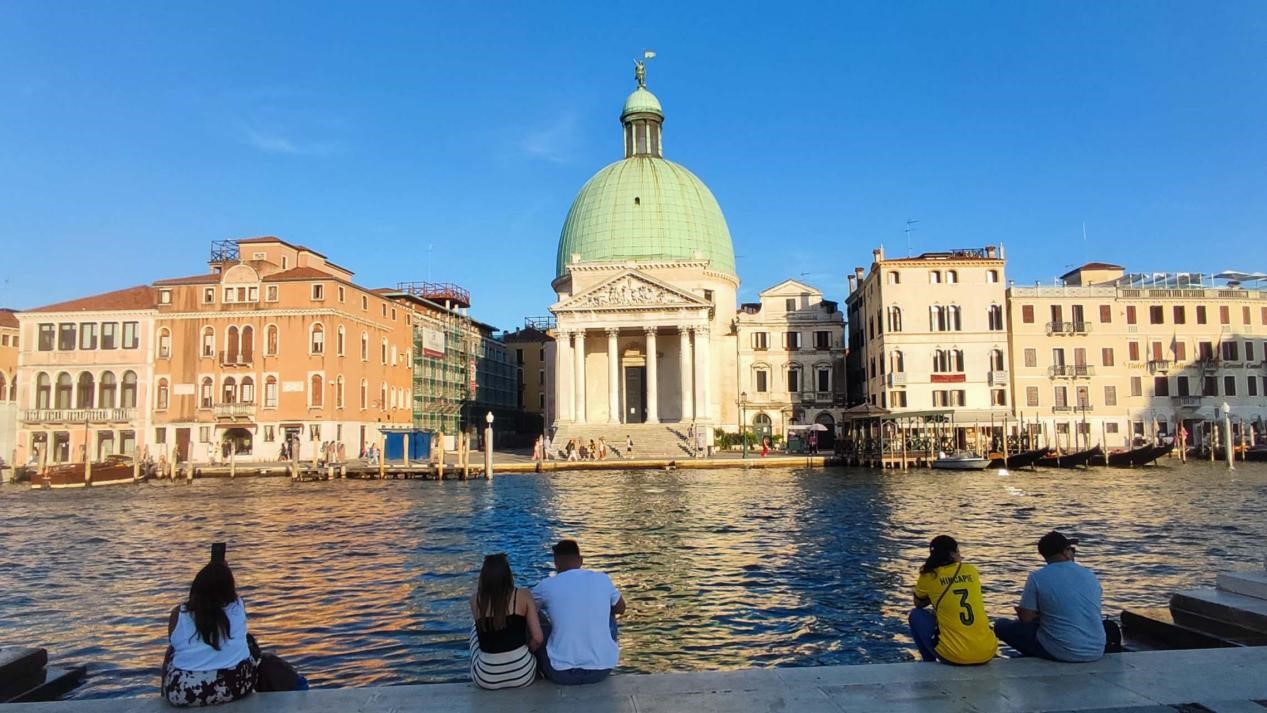
The Church of San Simeone Piccolo, located opposite Santa Lucia Railway Station. Its neoclassical façade and portico, inspired by Rome’s Pantheon, provide many travelers with their first glimpse of Venice. (Photo by the author)
Venice: A Historic Hub of Chinese Studies in Italy
The 26th Biennial Conference of the European Association for Chinese Studies (EACS) was held in the enchanting city of Venice, Italy. Since the Middle Ages, Venice has served as one of Europe’s principal gateways to the East and an important hub along the Maritime Silk Road. In the thirteenth century, the Venetian merchant Marco Polo traveled to the Yuan dynasty. His famous account, Il Milione (The Travels of Marco Polo), offered Europeans one of their earliest systematic descriptions of the prosperity and civilization of the distant Eastern empire, opening the door to centuries of dialogue and exchange between East and West.
Eastern Aesthetics in the European Imagination
The historical connection between Venice and China remains deeply embedded in the city’s artistic heritage and collecting traditions. As maritime trade flourished, Chinese porcelain, silk, lacquerware, and other luxury goods arrived in Venice, becoming prized possessions among the Republic’s nobility and courtly society.
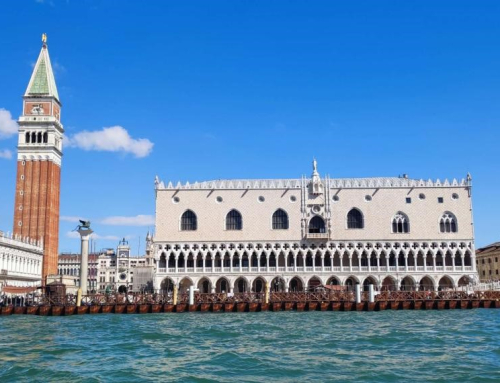
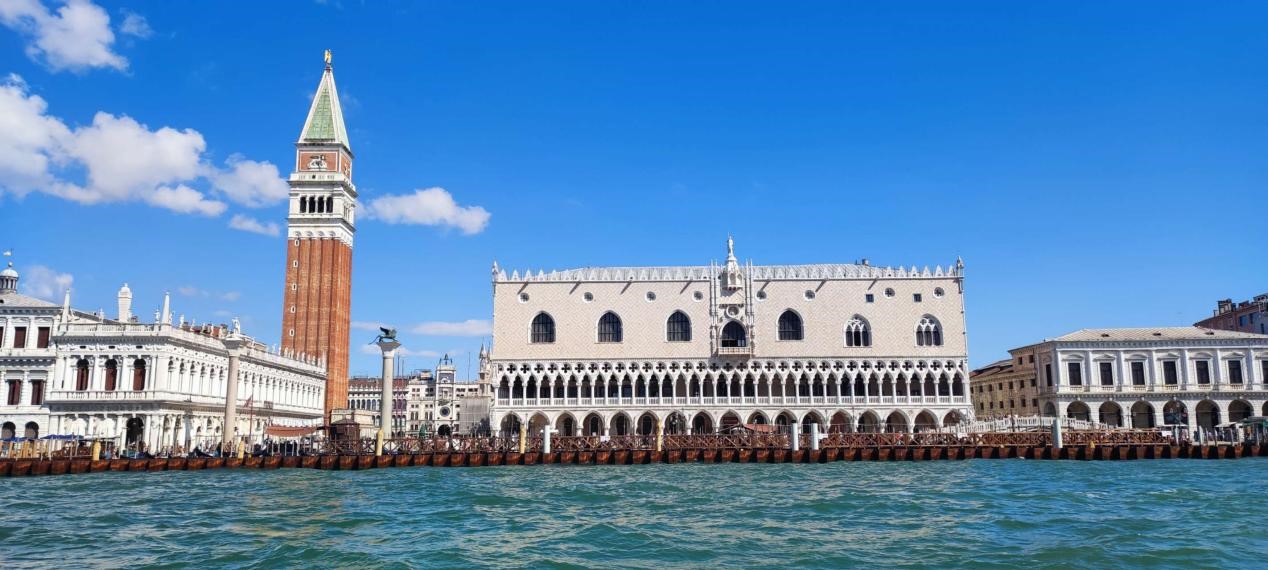
The Doge’s Palace, together with numerous aristocratic residences, bears witness to the close commercial and cultural ties that Venice established with the East. From collections of Chinese ceramics and textiles to the eighteenth-century fascination with Chinoiserie reflected in Ca’ Rezzonico, Eastern aesthetics gradually became part of Europe’s artistic imagination. Likewise, the celebrated glassmaking tradition of Murano benefited from the multicultural exchanges made possible by Venice’s role as an international trading center.
Today, EACS continues this tradition by providing an important platform for dialogue between Eastern and Western scholarship. In doing so, Venice once again bridges cultures across time, writing a new chapter in the city’s long history as a meeting place of civilizations.
A City Built on Water, Prospering Through Exchange
Ca’ Foscari University of Venice traces its origins to 1868, when it was founded as the Royal School of Commerce (Regia Scuola Superiore di Commercio). It later became a full university in 1968.
The university takes its name from Ca’ Foscari Palace, the magnificent fifteenth-century Gothic palace overlooking the Grand Canal. Renowned for its riverside façade, pointed Gothic windows, and elegant stone carvings, the palace has witnessed centuries of Venice’s commercial prosperity and cultural development. Following extensive restoration and adaptive reuse, it now stands as an exemplary model of how historic architecture can be successfully integrated with modern higher education.
Looking across Venice’s Grand Canal toward St. Mark’s Basilica. (Photo by the author)
The San Giobbe Campus, venue of this year’s EACS conference, is located in the historic Cannaregio district on the northern side of Venice’s main island, approximately a ten-minute walk from Santa Lucia Railway Station. The site originally served as the city’s municipal slaughterhouse during the nineteenth century. After years of restoration and redevelopment, it reopened in 2008 as a modern university campus that carefully preserves its industrial heritage while incorporating contemporary teaching and research facilities. Continuous improvements in recent years have further enhanced the campus.
Today, San Giobbe serves as one of the university’s principal centers for teaching and research in economics, management, and law. It also hosts numerous international conferences and academic forums, exemplifying the successful integration of Venice’s historic cultural heritage with contemporary scholarship.
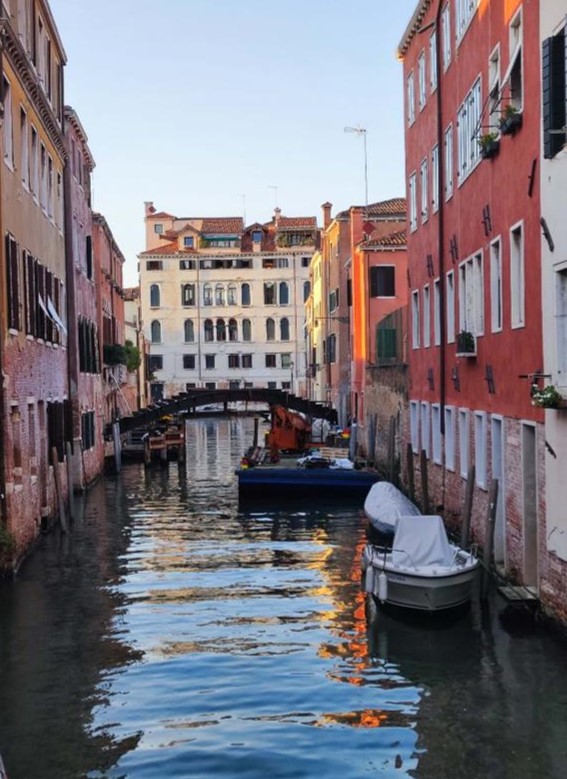
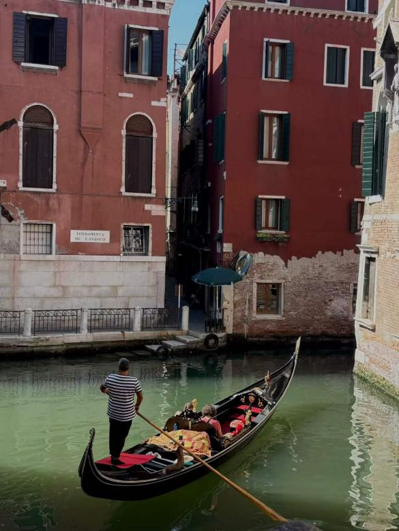
Scenes from the City of Canals. (Photo by the author)
An Active Participant in the Global Network of Chinese Studies: Nearly Forty Asian Languages Offered
Drawing upon Venice’s centuries-old role as a gateway between East and West, Ca’ Foscari University of Venice has established an outstanding international reputation in Chinese Studies, linguistics, and area studies.
Its Department of Asian and North African Studies offers instruction in approximately forty Asian and Middle Eastern languages, including Arabic, Turkish, Persian, Sanskrit, Chinese, Japanese, and Korean, making it one of Europe’s leading centers for the teaching and research of Asian languages.
Since introducing Chinese language courses and establishing a chair in Chinese Studies during the 1960s, the university has developed a comprehensive research program encompassing Chinese language, literature, history, philosophy, and culture. It has also built extensive partnerships with universities, libraries, and research institutions both within and beyond Italy, playing an active role in strengthening the international network of Chinese Studies.
Together with Sapienza University of Rome and the University of Naples “L’Orientale,” Ca’ Foscari forms one of Italy’s three principal centers for Chinese Studies, creating a nationwide scholarly network that spans the Italian peninsula from north to south.
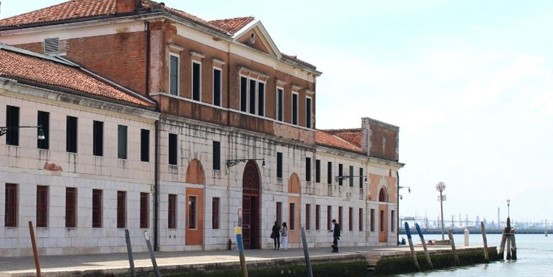
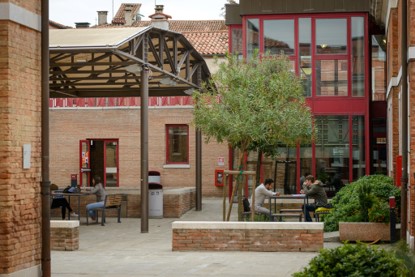
The exterior and courtyard of the San Giobbe Campus. (Image courtesy of Ca’ Foscari University of Venice.)