What If Every Document Had Its Own Network of People, Events, Times, Places, and Things?
By Jeff Fan
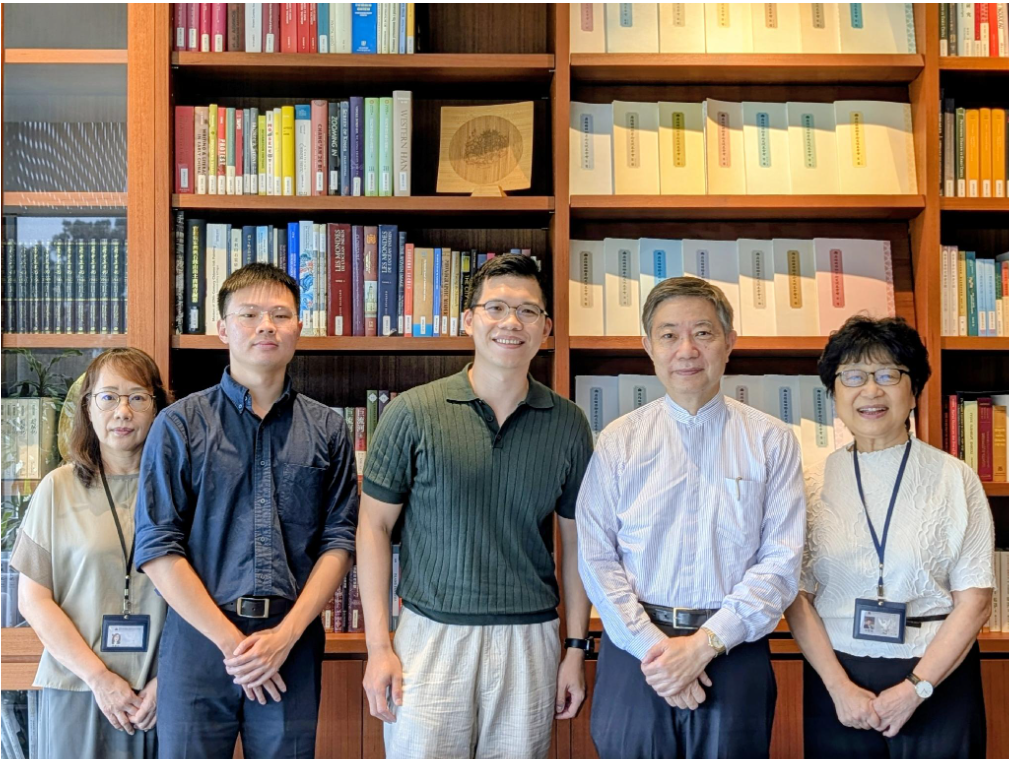
On October 1, 2026, United Digital Publications (UDP) visited the Chiang Ching-kuo Foundation for International Scholarly Exchange (CCKF), where we met with Executive Director Chen Chun-i and several senior staff members to exchange ideas on the digitization, accessibility, and promotion of resources for international Sinological research.
More Than Three Decades of Support for International Sinology
Established in 1989, the Chiang Ching-kuo Foundation for International Scholarly Exchange has consistently supported academic institutions and scholars around the world in their study of Chinese culture, maintaining rigorous academic standards and an independent approach to research funding. The Foundation also promotes cooperation and exchange among academic institutions in Taiwan and abroad.
Over the past three decades, the Foundation has funded nearly 5,000 research projects, more than 1,000 scholarly papers, and over 1,000 publications across more than 60 countries. It has also supported the writing of more than 1,000 doctoral dissertations and helped 120 universities in Europe and North America establish over 140 faculty positions in Sinology, Chinese Studies, and Taiwan Studies.
Behind these figures lies a significant reality: many scholars of Chinese Studies in Europe and North America today have benefited from Taiwan’s support at various stages of their academic careers—from doctoral dissertations and postdoctoral research to faculty appointments. The Foundation is therefore widely regarded as one of the world’s most important funding institutions for Sinological research.
Overseas Sinology Centers and the Chiang Ching-kuo Presidential Library
Beyond its grant programs, the Foundation has established overseas Sinology centers in the United States, the Czech Republic, Hong Kong, and Germany, while continuing to expand academic cooperation in Japan and Singapore.
Each center has developed its own areas of emphasis in response to the local academic environment. Some focus on contemporary Taiwan Studies, others on literature and history or philosophy, while still others offer international summer programs for scholars and students.
The Chiang Ching-kuo Presidential Library, officially opened in November 2022, is the first presidential library in the Republic of China (Taiwan). It collects and preserves archives, documents, and historical artifacts relating to the life and legacy of President Chiang Ching-kuo, while promoting related research and academic activities.
The Library welcomes applications from scholars and graduate students in the humanities and social sciences, both in Taiwan and abroad, and continues to engage with international academic institutions.
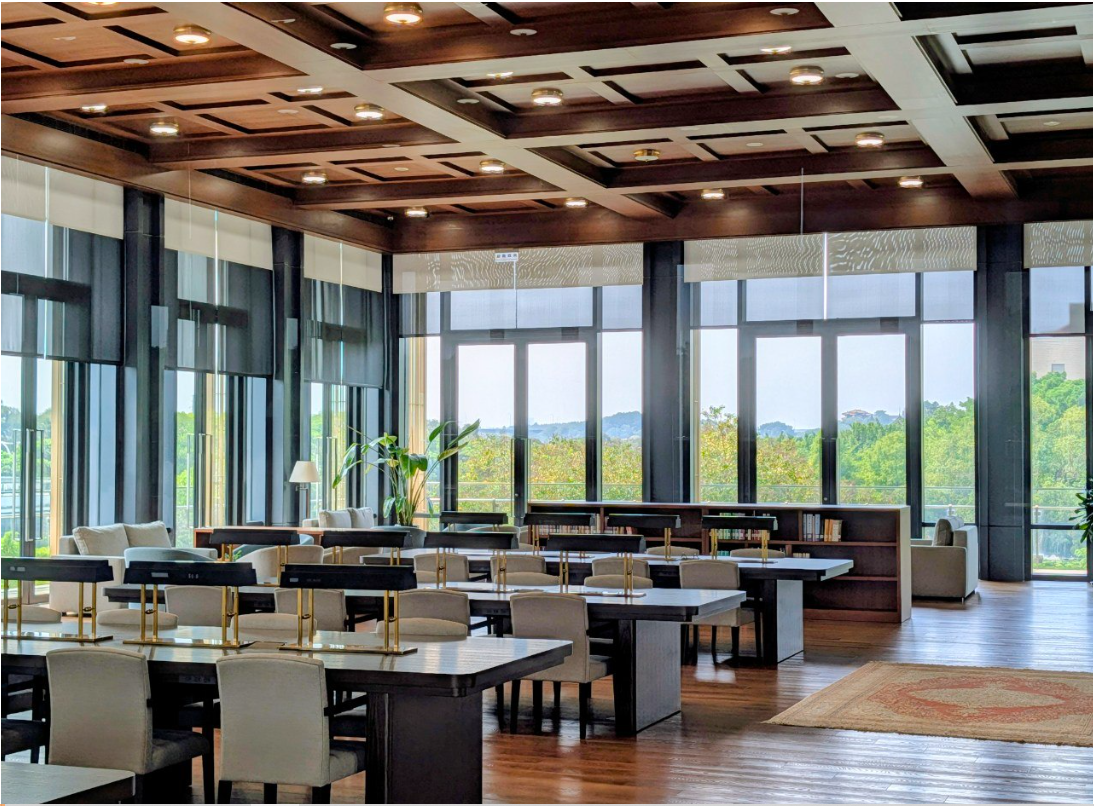
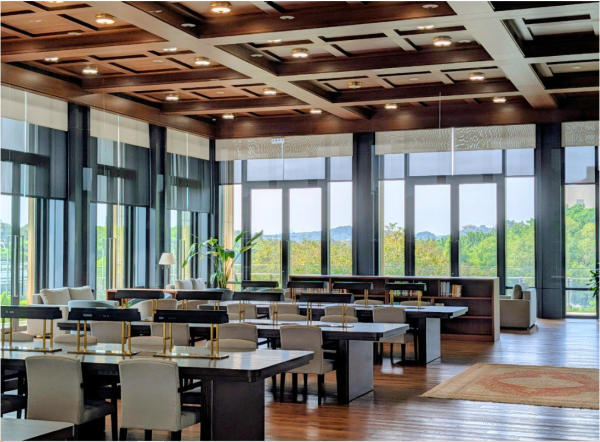
During our visit, we also toured the Library’s reading facilities and learned about its collection development and preservation plans.
The Focus of Our Discussion: Digitization and Access to Sinological Resources
The central question of our discussion was how Sinological research resources can be discovered and used more effectively in an era of rapidly advancing artificial intelligence.
Participants identified a familiar challenge: researchers often do not lack materials; rather, they do not know where to find them.
Sinological resources are scattered across countries, institutions, and digital platforms, each with its own search mechanisms and classification systems. For research spanning national and linguistic boundaries, simply locating relevant sources can consume a substantial amount of time.
The Foundation shared a vision it had been considering for many years: when researchers search for a topic, the related people, events, times, places, and things should unfold layer by layer, revealing their connections rather than merely returning a list of document titles.
When this idea was first proposed, the necessary technology was not yet available. Today, however, it is entering the realm of practical implementation.
UDP introduced an experiment currently underway on its Lumen platform. Using AI to examine documents individually, the system aims to identify people, events, dates, places, and objects mentioned in each source and establish relationships among them.
Such an approach would allow researchers to move from a person’s name to events in which that person participated, or from an event to the key individuals involved. It could also help researchers compare how different historical sources describe the same event.
Imagine what might change in academic research if digital documents were no longer merely searchable texts, but could also reveal networks connecting people, events, times, places, and things.
This is a fascinating AI capability with considerable potential for further research and development.
Our discussion also addressed linguistic challenges in Sinological materials.
The same ethnic community, place, or historical figure may appear under different names or spellings in documents from different periods. For specialists, these variations are often valuable historical clues. For beginning researchers or scholars working across disciplines, however, unfamiliarity with alternative names can mean overlooking entire collections of relevant materials.
How can digital tools help users discover these connections without altering the original historical records? Both sides agreed that this is an important direction for further exploration.
Cultural Materials from Chinese Communities Around the World
Our conversation also touched on cultural materials produced by Chinese communities in Southeast Asia and the Americas.
UDP is currently developing a Global Hakka Culture Database, bringing together community publications and historical documents from Hakka communities in Taiwan, Southeast Asia, mainland China, North America, and Oceania.
These materials are often geographically dispersed, printed in small quantities, and preserved under widely varying conditions. Nevertheless, they constitute invaluable primary sources for studying Chinese migration, community organizations, and the ways local communities have documented their own histories.
The Foundation expressed interest in this initiative and shared observations from its previous visits to Southeast Asia.
Looking Ahead
Since its establishment in 1992, UDP has focused on publishing digital research databases in Sinology and Asian Studies. Today, its resources serve more than 1,200 academic institutions worldwide.
We sincerely appreciate the Foundation’s warm welcome and the valuable exchange of ideas. We look forward to opportunities to contribute further to the accessibility and international dissemination of Sinological research resources.