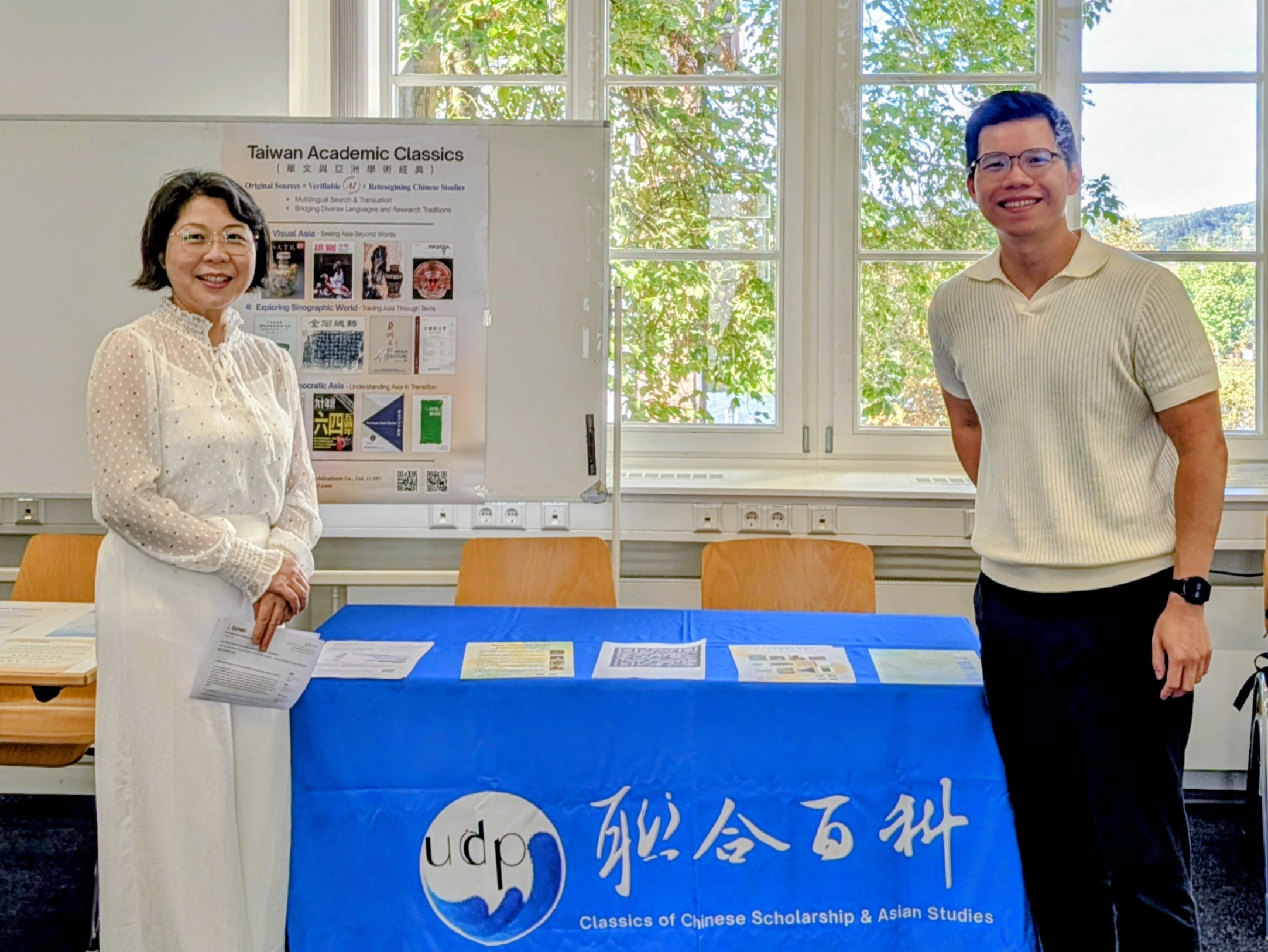
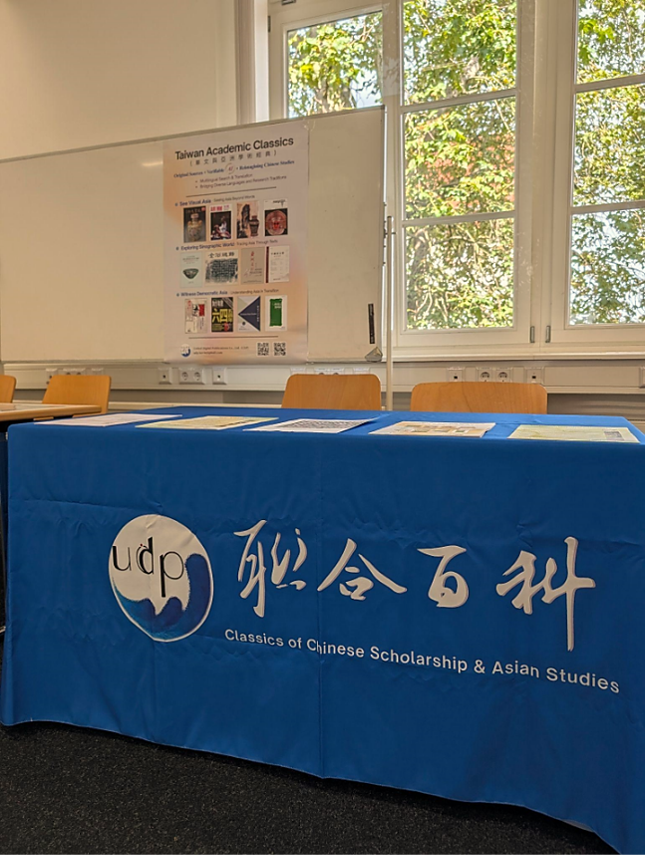
The 46th annual conference of the European Association of Sinological Librarians (EASL) took place at the CATS Library in Heidelberg from September 2 to 4. UDP attended as a publisher and had a presentation slot on the morning of September 3. But the real reward of the week came on September 4, when the librarians presented their own research.
This year’s teme was “Minority Languages.” Across several presentations, I heard different ways of describing essentially the same problem—one that happens to be central to our work every day: the distance between what a library holds and what a reader can actually reach.
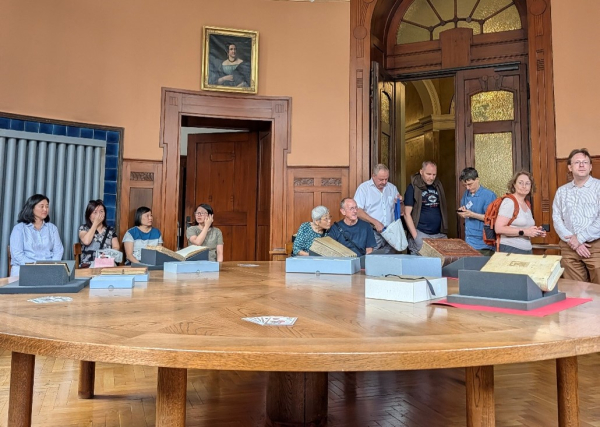
Jeff Fan (United Digital Publications): The Global Hakka Database
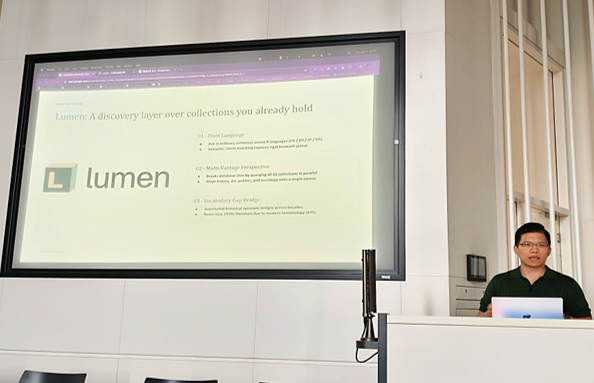
Jeff Fan (United Digital Publications): Global Hakka Database
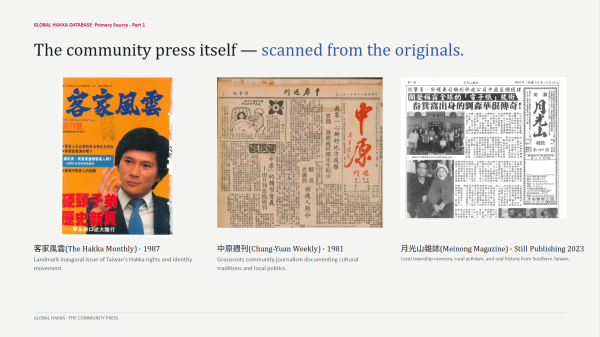
Jeff Fan (United Digital Publications): Global Hakka Database
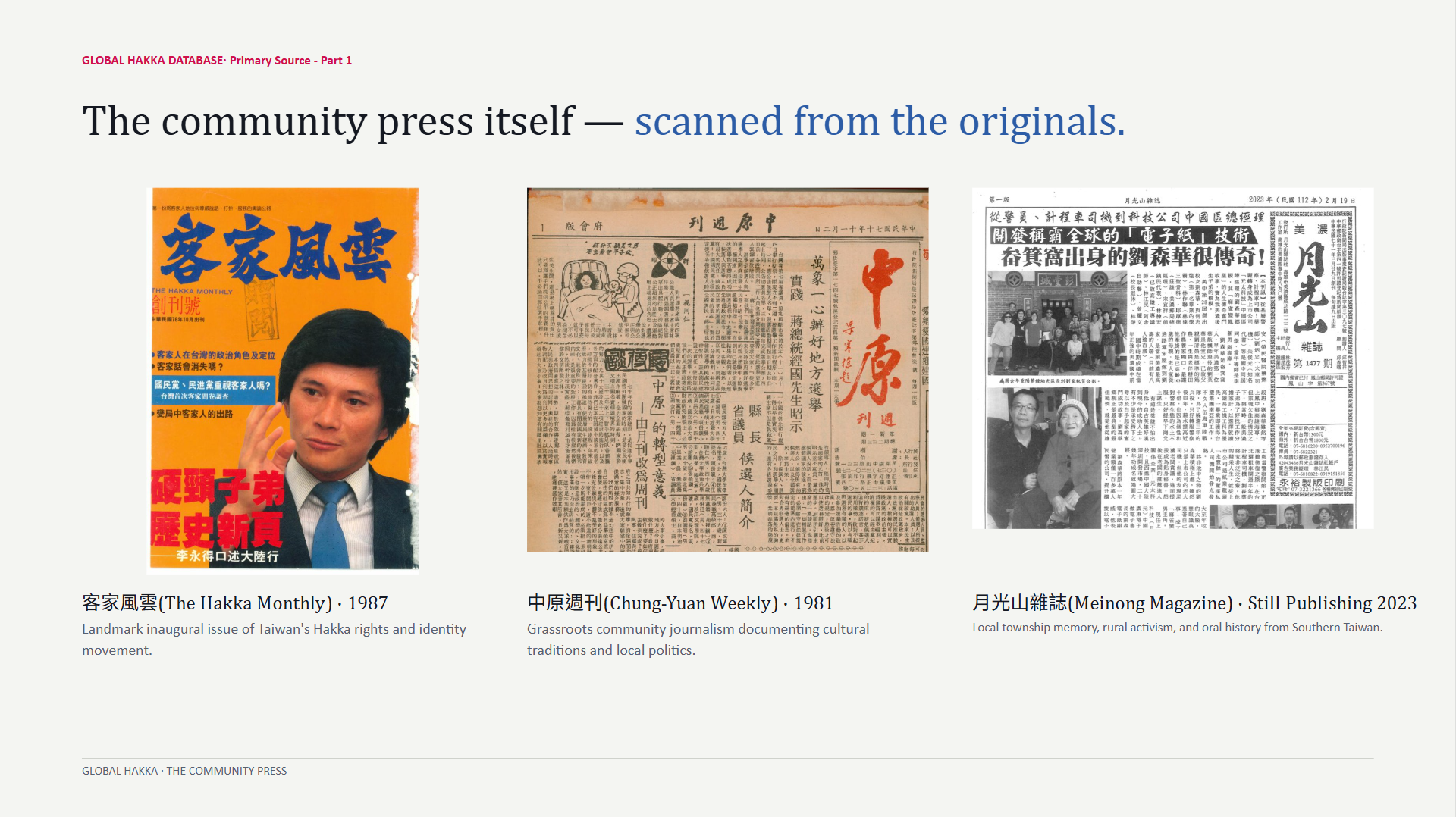
I introduced the Taiwan Academic Classics platform, Lumen, the AI-powered discovery layer built upon it, and the ” Global Hakka Database”. The Taiwan Series is currently halfway complete: five long-running grassroots Hakka magazines, published in Taiwan from 1960 to the present, are being made available for full-text search. Over the next three years, the project will expand to mainland China, Southeast Asia, North America, Australia, and eventually Hakka community publications across the global network.
What prompted discussion afterward was not the technology, but the community publications themselves: Hakka Affairs Monthly Magazine, Chung Yuan Weekly, Meinong Today, and Moonlight Mountain Magazine—township newspapers and movement magazines from the 1960s, many of which survive in only one known location anywhere in the world.
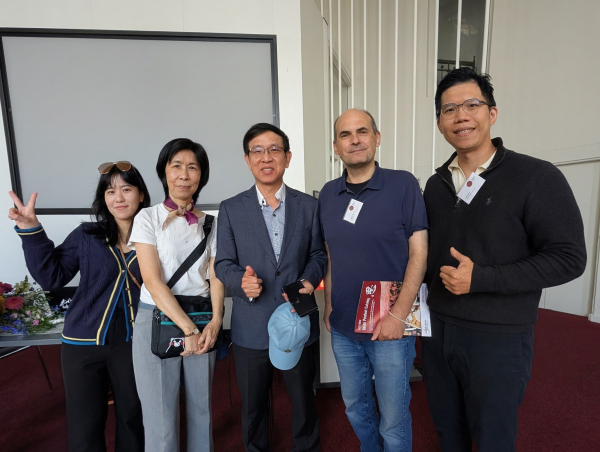
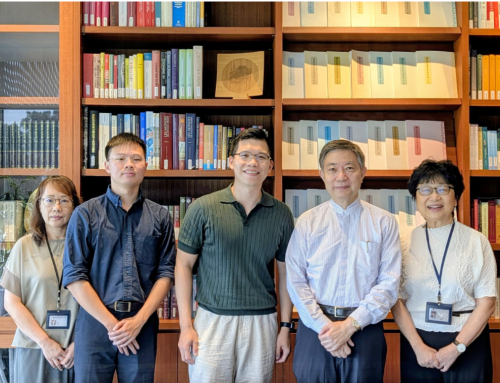
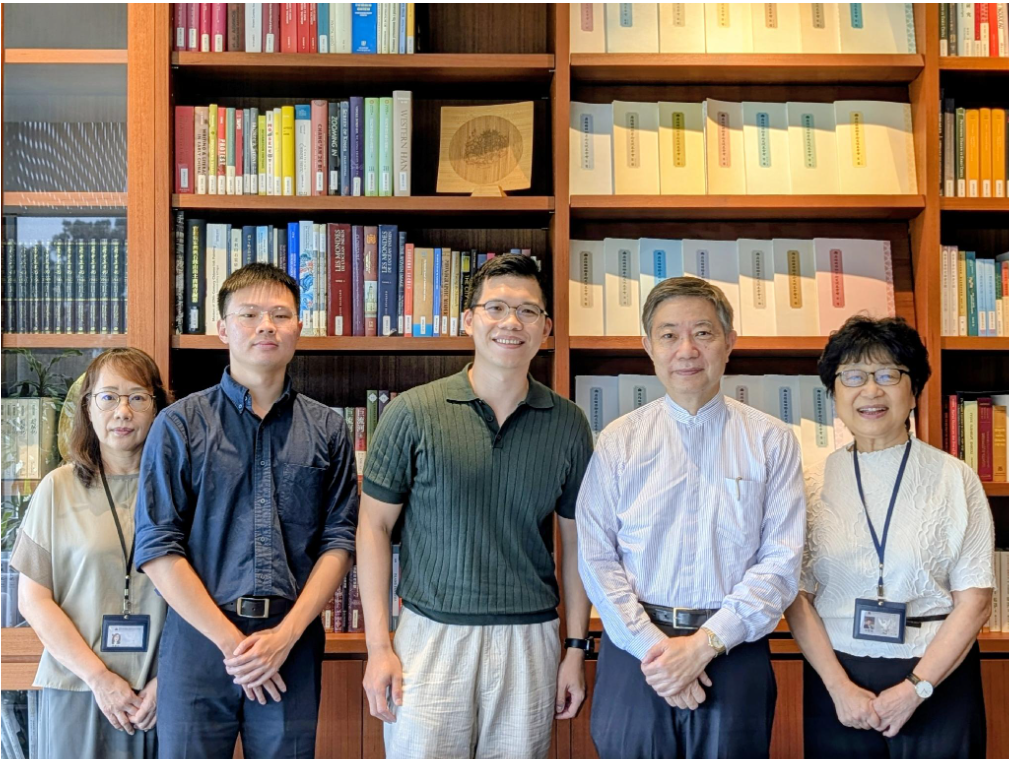
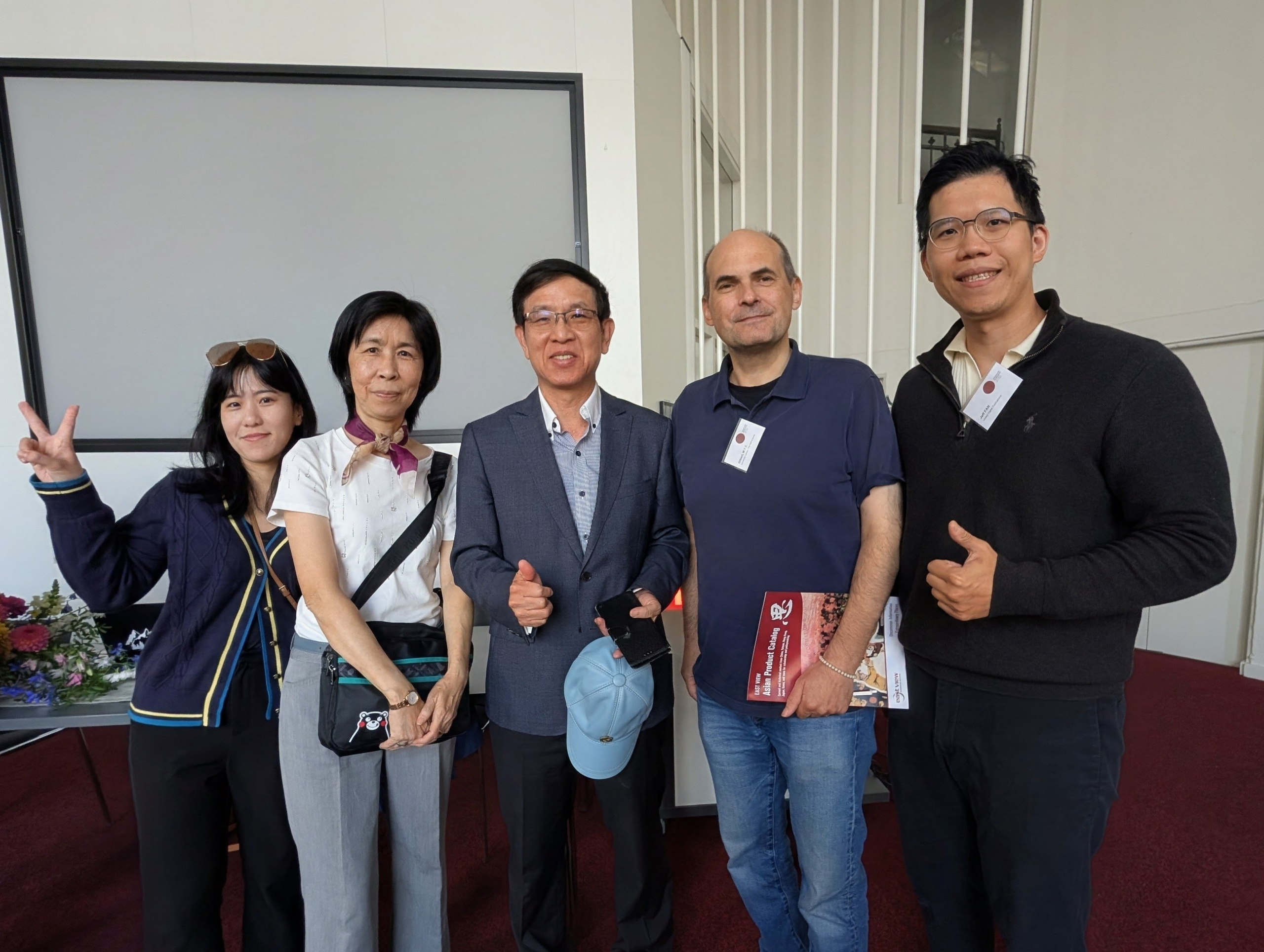
National Library, Taiwan: Deputy Director-General Weng Chih-tsung翁誌聰; Director Min Kuo-chi閔國棋, International Cooperation Division; and Assistant Editor Chen Ssu-yu陳思予.
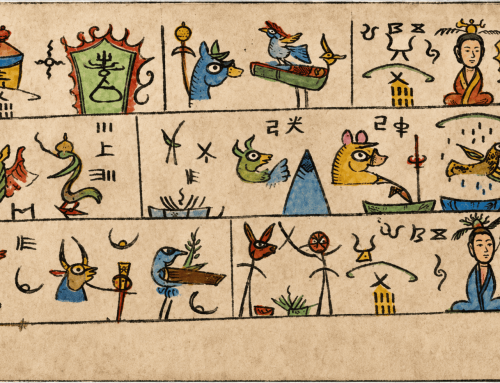
Hanno Lecher (Heidelberg CATS Library): Yao Manuscripts
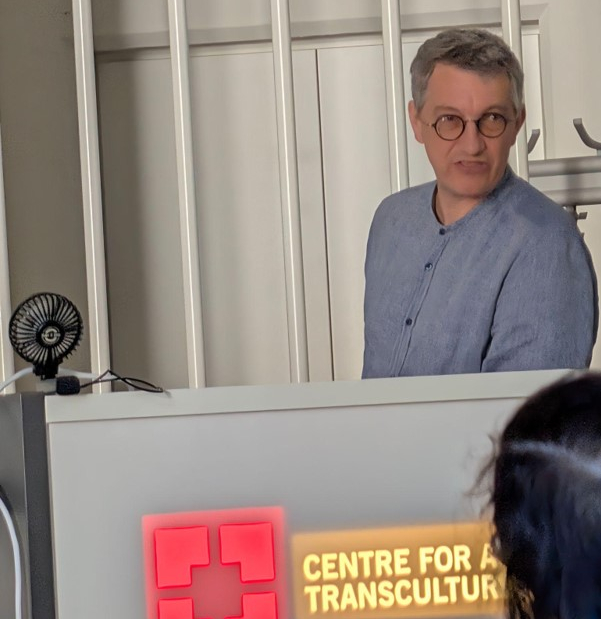
Hanno Lecher (CATS Library, Heidelberg University): Yao Manuscripts
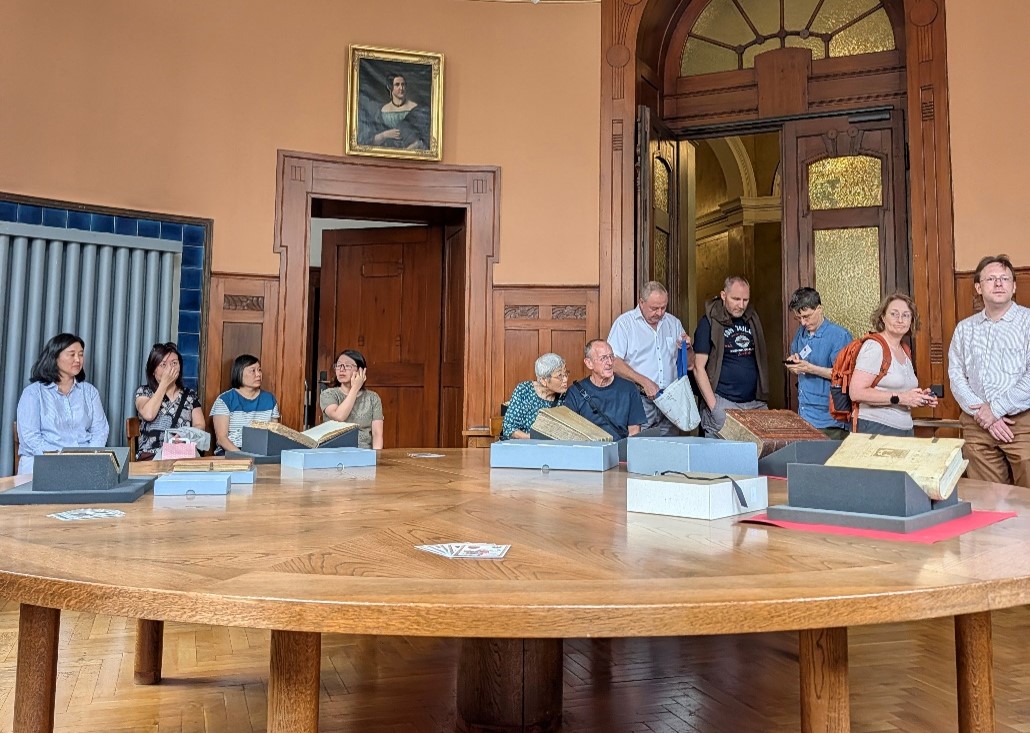
Heidelberg’s collection of Yao manuscripts was acquired from antiquarian dealers in the 1990s. It formed part of a larger group that was divided among several European institutions—Oxford, Munich, and Leiden—and related collections later appeared in North America. These manuscripts are Daoist texts written in Chinese characters by Yao communities in southern China and Southeast Asia.
What stayed with us most was the cost of that dispersal. Because the manuscripts had originally been purchased village by village through intermediaries, many arrived without inscriptions identifying their owners, dates, or places of origin. The manuscripts themselves survived, but the context surrounding them did not. Cataloguing individual items is also extraordinarily slow: despite decades of project funding, much of the collection remains undescribed.
Hsieh Han-ning (British Library): Tracing the Provenance of Naxi Manuscripts
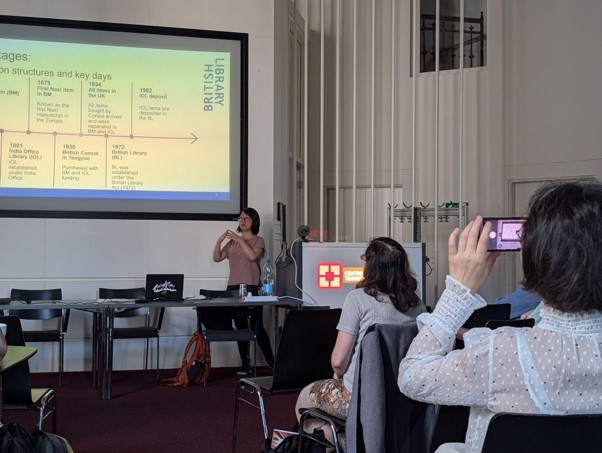
Hanning Hsieh (British Library): Provenance Research on Naxi Manuscripts
She reconstructed the complete route by which a collection of Naxi manuscripts entered the British Library: from the British consul stationed in Tengyue in the late 1920s, through private hands, into the British Museum in 1934, then to the India Office Library, and finally to the British Library in 1972. During the same period, Joseph Rock was collecting in the same region and sending materials back to the United States.
Two points from this presentation are worth recording.
First, names are themselves historical evidence. At different times, these materials were referred to as 摩沙夷, 麼些, 磨些, 摩梭, and eventually 納西. The term used in a document can therefore offer an indication of when it was written and by whom.
Second, translation is not merely an academic matter. It also involves obtaining permission from Naxi religious communities. This is a question of access that no cataloguing system can resolve, and it was one of the most consequential observations of the entire day.
Joshua Seufert (Princeton): New Uyghur Collections
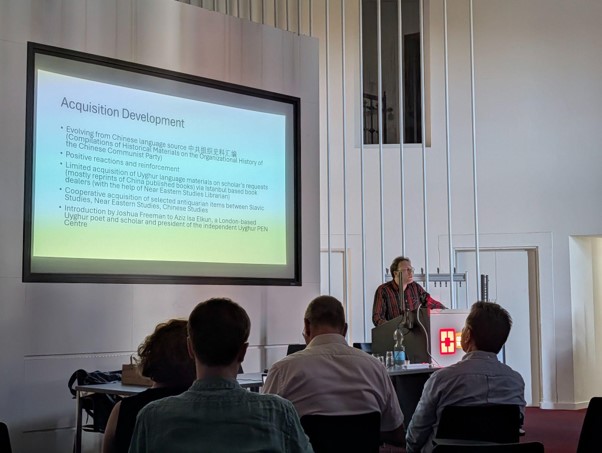
Joshua Seufert (Princeton University): New Uyghur Collections
Princeton University has acquired the private library of Aziz Isa Elkun, a Uyghur poet and scholar living in London, and now holds one of the largest Uyghur collections outside East and Central Asia.
The collection’s beginnings were unexpected: it started with Chinese-language materials and grew through several different channels, including booksellers in Istanbul, rare-book acquisitions jointly funded by three subject areas, and finally the acquisition of Elkun’s library as a whole.
Two structural problems emerged. First, Uyghur materials span three scripts—Arabic, Cyrillic, and Latin—because the writing system has changed several times for political reasons. A reader familiar with only one script will not automatically discover materials written in the other two.
Second, Uyghur materials fall awkwardly between three collecting areas: East Asian, Slavic-Eurasian, and Near Eastern studies. This has been a major reason for their long-term neglect. Princeton’s response was to bring three subject librarians together to support the acquisition.
Anna Stryjewska (Staatsbibliothek zu Berlin, CrossAsia): Content Discovery and Licensing
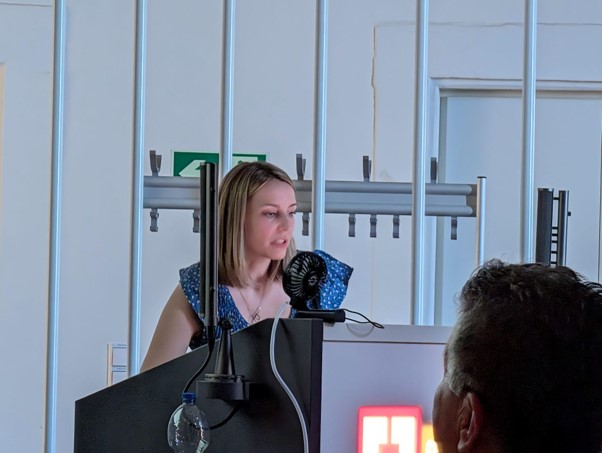
Anna Stryjewska (CrossAsia, Berlin State Library): Content Search and Licensing
She introduced the CrossAsia Newspaper Research Companion, a new route into the newspaper collections of the Staatsbibliothek zu Berlin.
Newspapers are among the most difficult materials to index. Articles run across columns, headlines are not book titles, and a single page may contain dozens of unrelated items. What makes projects of this kind interesting is often not simply what they achieve, but what they must give up in order to become genuinely usable.
In the conference rooms and corridors, discussions about CrossAsia repeatedly returned to licensing. Research libraries no longer want merely to display a page to a reader; they increasingly want to analyze entire corpora.
David Helliwell (Oxford): On Ephemera
The final presentation of the conference was also the one closest to UDP’s own work.
Ephemera are printed materials that were never intended to be preserved in the first place: leaflets, programmes, community newsletters, and township newspapers. They are rare precisely because nobody originally thought to collect them. They survive only because someone made a deliberate decision to keep them.
This is almost a definition of Hakka community publications. These magazines were produced by social movements and local communities, with no expectation that an archive would one day exist for them. Unless someone collects them, scans them, and clears the necessary rights, they will not survive. And that is precisely what much of the work behind the Global Hakka Database actually involves.
An Empty Shelf = A Shelf That Cannot Be Found
Read together, the week’s presentations describe the same problem in different vocabularies.
The Yao manuscripts lost their context during the process of dispersal. Naxi materials were catalogued under names that most readers no longer recognize, while fragments in Prague have never been described. Uyghur collections are divided among three scripts and three academic collecting areas. The discoverability of CrossAsia’s newspapers extends only as far as someone once had the time to build an index.
In every case, the materials are still there. What has failed is the route leading to them. From a reader’s point of view, an empty shelf and a shelf that cannot be found look exactly the same.
This is the problem we are trying to address. Spending three days with people who have been working on it longer than we have, with less funding and more material, was immensely valuable.
My thanks to Hanno Lecher and the CATS Library for hosting the conference, and to everyone who took the time to explain their collections to a publisher who, for most of the week, was simply sitting and listening.
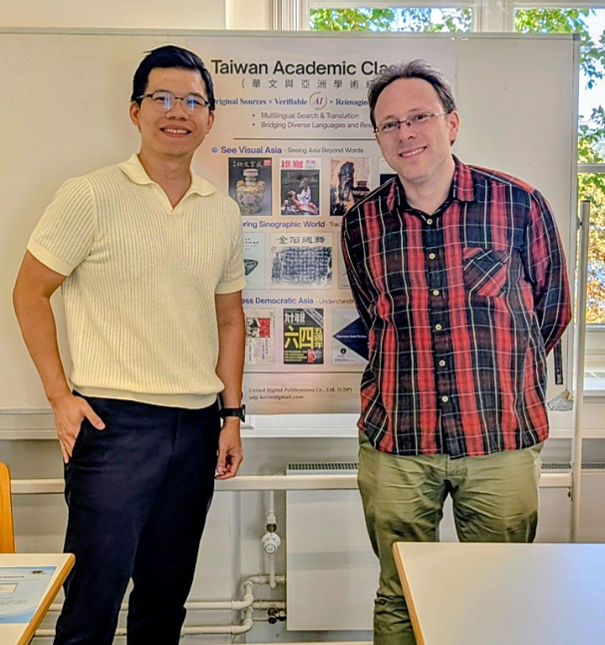
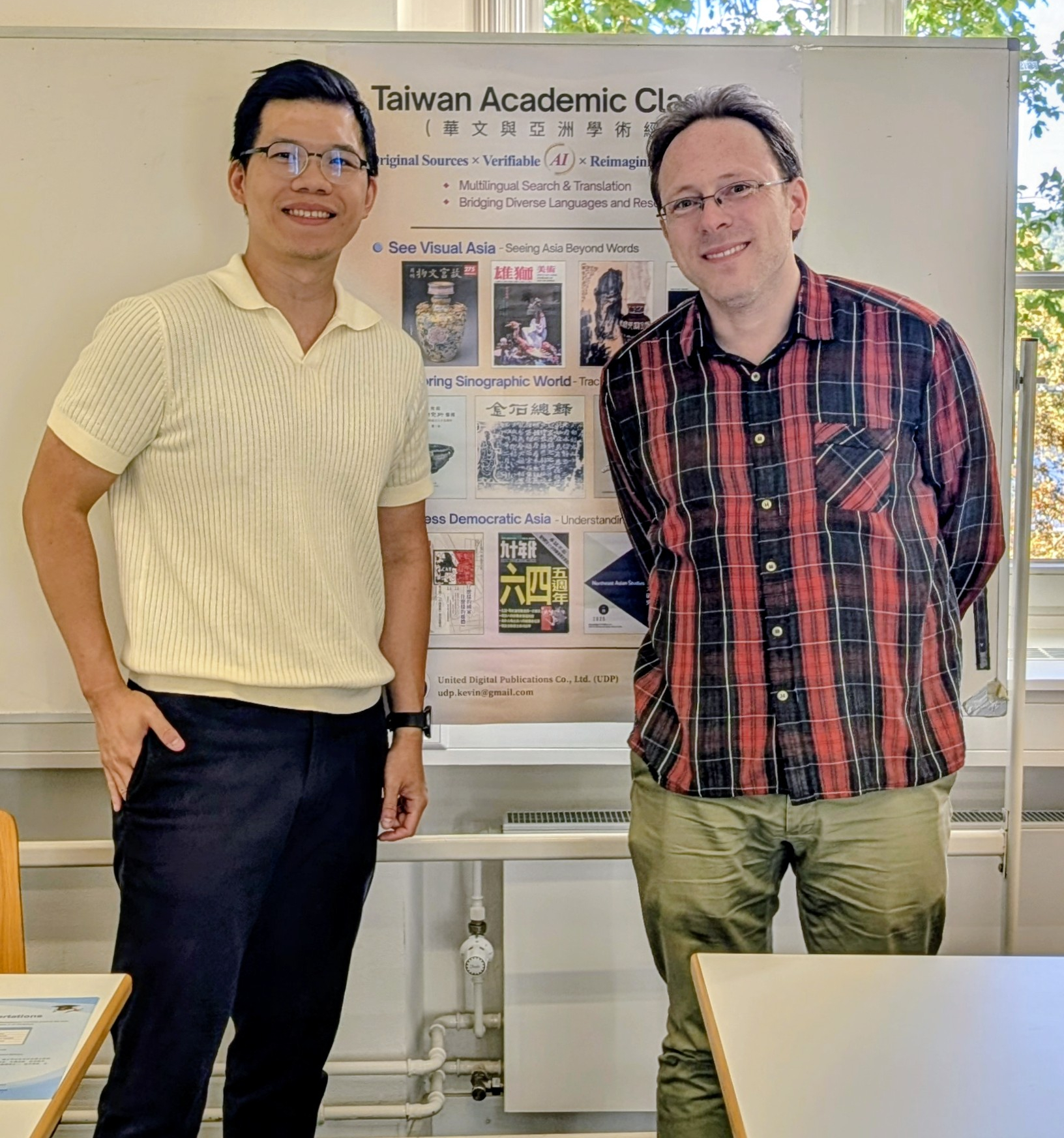
With Joshua Seufert – Director, East Asian Library and Chinese Languages Librarian of Princeton University
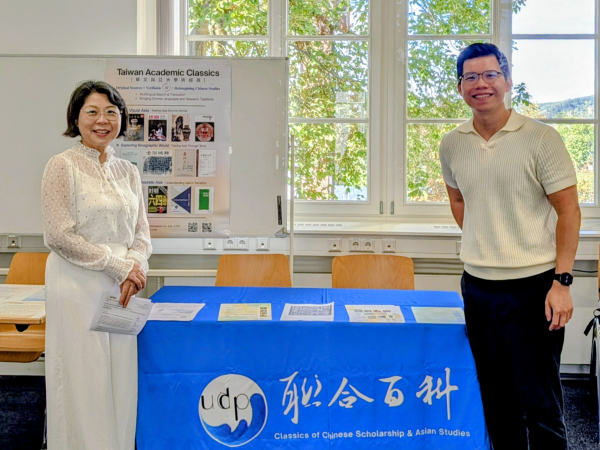
With Ruili Zhang, a librarian at the University of Manchester Library.