





Written by Kevin Chang 曾凱文
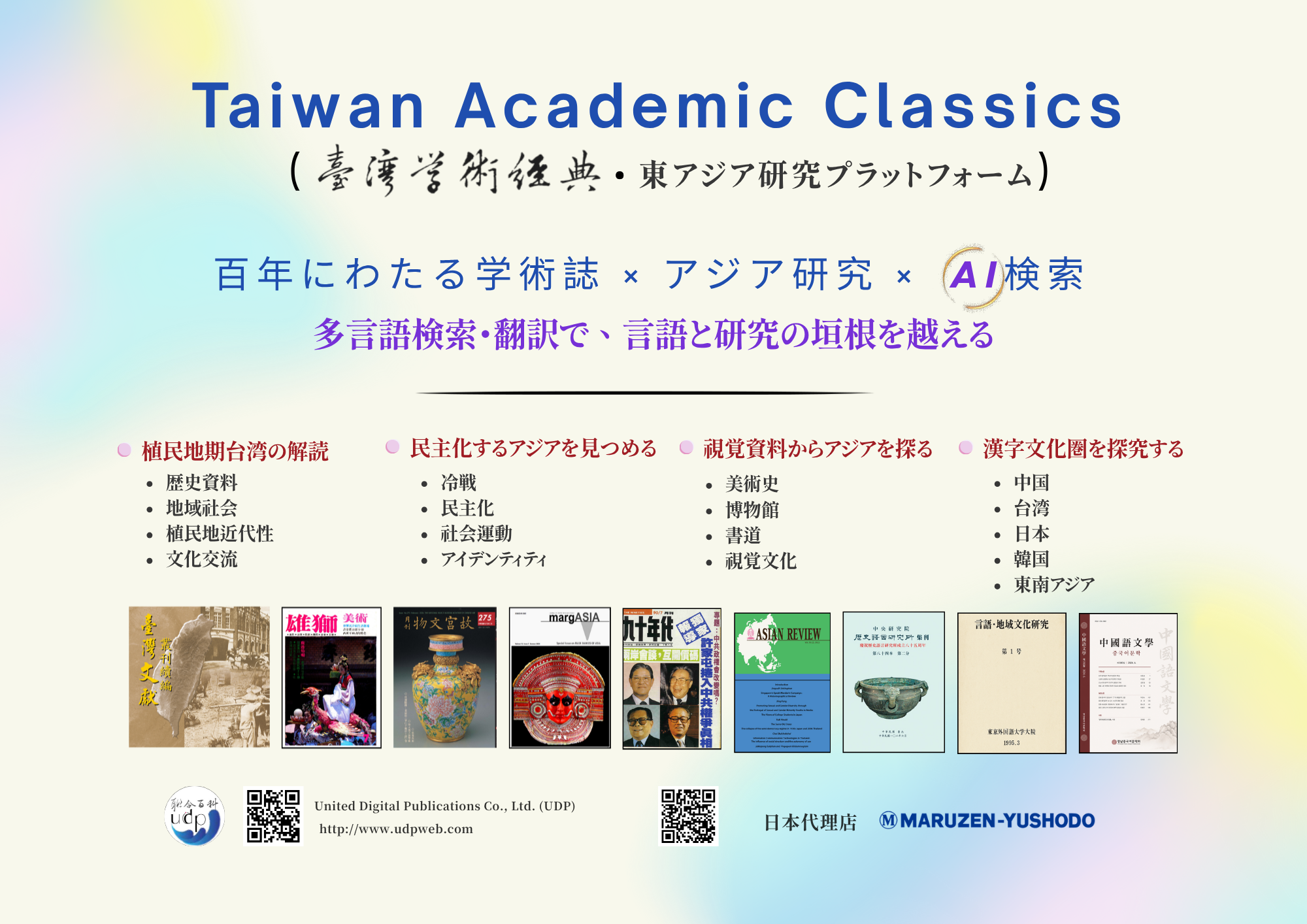
The 28th Asian Studies Conference Japan (ASCJ) was held on July 4–5, 2026, at Sophia University in Tokyo, Japan. Invited as an exhibitor, United Digital Publications (UDP) showcased its Lumen AI Search technology together with four major digital humanities collections, including Colonial Taiwan, Democratic Asia, and the Chinese Character Cultural Sphere. Through in-depth discussions conducted in both English and Japanese, UDP engaged with nearly 500 scholars from around the world and received highly positive feedback.

Record Attendance from Around the World
ASCJ is one of the most distinguished international conferences in the field of Asian Studies, bringing together scholars, researchers, and graduate students from around the globe. It has long served as a leading platform for academic exchange on Asia-related research.
According to the conference organizers, approximately 500 participants attended this year’s meeting, making it the largest ASCJ conference since its inception. The record-breaking attendance reflects the continued vitality and growing international interest in the field of Asian Studies.
Participants at this year’s conference came from around the world, including Japan, South Korea, China, Hong Kong, Taiwan, the United States, Vietnam, France, and Germany. They represented a wide range of academic disciplines, universities, research institutions, and cultural backgrounds.
Bringing together scholars from diverse academic traditions and regional perspectives, the conference provided a vibrant forum for presenting the latest research findings, exchanging ideas, and fostering new international collaborations in the field of Asian Studies.
 A Diverse Program Showcasing the Breadth and Depth of Asian Studies
The conference featured nearly 100 sessions covering a wide range of disciplines and research topics. With multiple high-quality presentations taking place simultaneously throughout the program, many participants remarked that the greatest challenge was choosing which sessions to attend. This reflected not only the richness of the conference program but also the exceptional quality and diversity of the research presented.
This year’s program spanned numerous fields, including history, linguistics, literature, art, sociology, and religious studies. The geographical scope extended across China, Japan, Korea, Southeast Asia, and South Asia, while the chronological range stretched from antiquity and the medieval period through the modern era to contemporary society. Together, these presentations highlighted the interdisciplinary, transhistorical, and transregional nature of Asian Studies and demonstrated the field’s continued vitality and expanding global relevance.

Kevin, Business Manager at UDP, visits Maruzen-Yushodo, UDP’s Japanese distribution partner and a co-organizer of the Japan Library Fair 2026
Rethinking Asian Studies from a Transregional Perspective
One of the conference presentations highlighted the importance of adopting a transregional perspective in Asian Studies. The speaker argued that regions such as Northeast Asia and Southeast Asia should not be treated as isolated and independent units of analysis. Instead, greater attention should be paid to the long histories of migration, cultural exchange, knowledge circulation, and economic interaction that have connected different parts of Asia, viewing the region as an interconnected whole rather than a collection of separate entities.
This perspective resonated strongly with the broader themes of this year’s conference. From studies of transnational religious networks and the circulation of knowledge across cultures, to research on translation and knowledge transfer between East Asia and the West, as well as historical memory and identity shaped by migration, many presentations demonstrated that cross-regional and cross-cultural approaches have become central directions in contemporary Asian Studies.
Together, these studies illustrated how the field has moved beyond traditional frameworks defined by nation-states, ethnic groups, or geographic boundaries. Increasingly, scholars are examining historical interactions across regions and empires while integrating methodologies from multiple disciplines. Through interdisciplinary and transregional approaches, researchers are developing new ways to understand the historical, cultural, and social development of Asia. This evolution reflects the field’s continuing movement toward greater integration and a broader global perspective.

Kevin was introducing UDP’s productions to the attendees
Strengthening International Exchange and Expanding Academic Collaboration
Through its participation in ASCJ 2026, United Digital Publications (UDP) not only introduced Taiwan’s digital resources in the humanities and social sciences to the international academic community, but also strengthened connections with scholars from around the world while gaining valuable insights into the latest developments in Asian Studies.
According to the conference organizers, the 29th Asian Studies Conference Japan (ASCJ) will be held in 2027 at International Christian University (ICU) in Mitaka, Tokyo. UDP looks forward to continuing its participation in major international academic conferences and working together with the global scholarly community to advance Asian Studies and the humanities and social sciences.
-
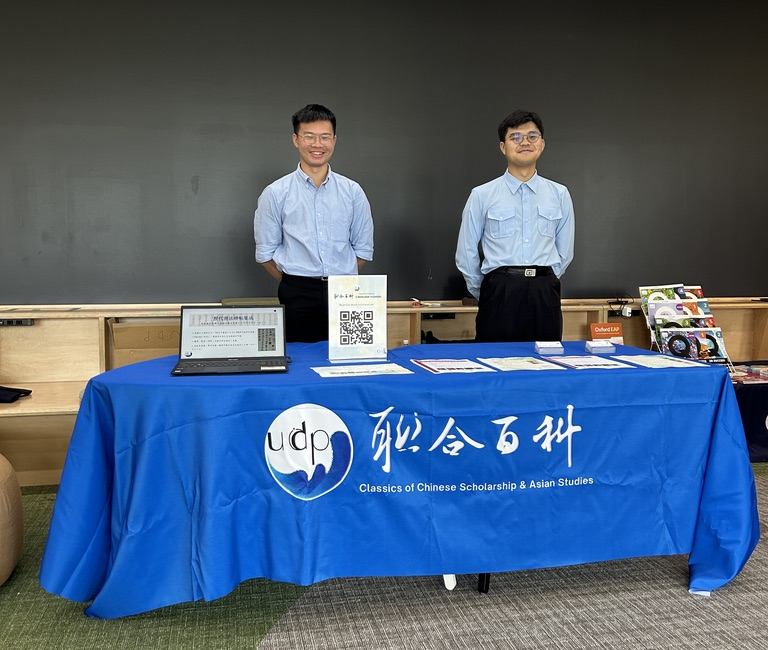
Kevin Chang with Chiyu Peng (彭啟佑), Japanese Interpreter of United Digital Publications (UDP)