Reflections from AAS-in-Asia 2026, Lahore, Pakistan
On-the-Scene Report by Dr. Zhang Lu, UDP Special Correspondent
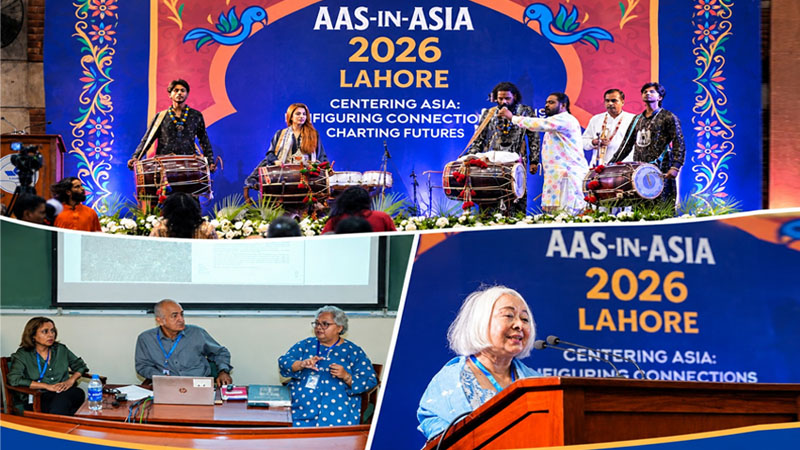
Local media coverage of AAS-in-Asia 2026. Photo credit: Associated Press of Pakistan.
Lahore awakens early. Motorcycles and three-wheeled vehicles weave through crowded streets, while vendors’ calls, honking horns, and the call to prayer echo across the city. Modern life unfolds against a backdrop of centuries-old history.
Attending AAS-in-Asia 2026, presenting an academic paper, and exploring Lahore and the India–Pakistan border offered an opportunity to reconsider Asia’s diversity and the Global South’s role in shaping knowledge and the future.
Held September 25–27, 2026, at Lahore University of Management Sciences (LUMS), the conference brought together more than 1,200 speakers across 323 sessions. Its theme, “Centering Asia: Refiguring Connections, Recharting Futures,” challenged participants to rethink how Asia is understood and defined.
Who Defines Asia?
Who has the authority to define Asia? What historical and cultural connections have been overlooked by national boundaries and conventional approaches to area studies? Conference discussions explored governance, inequality, technology, ecology, gender, and cultural expression, reflecting the increasingly interdisciplinary nature of Asian studies.
Pakistan offers a compelling setting for these questions. Situated at the crossroads of South, Central, and Southwest Asia, it has long been shaped by migration, trade, religion, and political change.
Lahore itself embodies this complexity. Once a major center of the Mughal Empire, the city reflects centuries of interaction among Islamic, South Asian, Persian, and Central Asian traditions. Colonialism and the 1947 Partition added further layers to its history.
Modern borders may divide nations, but cultural and historical connections rarely follow such clear lines.
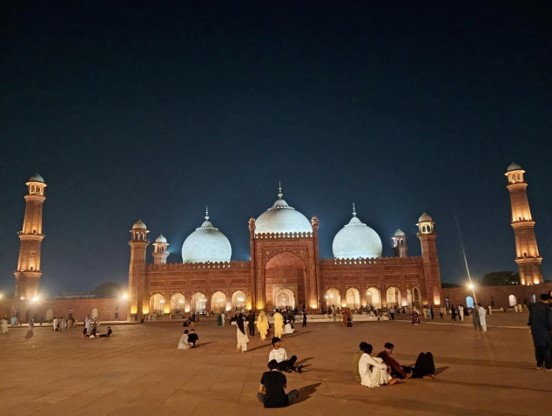
The Badshahi Mosque, also known as the Royal Mosque, is one of Lahore’s most iconic historical landmarks. Built in 1673, it is an important example of Mughal architecture. Photo credit: Author.
Who Can Participate in Knowledge Production?
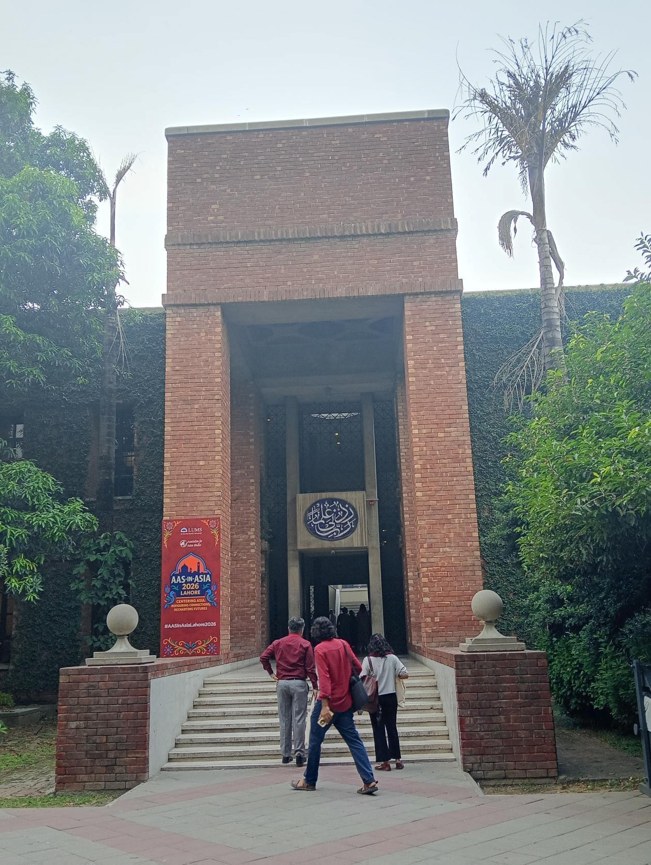
The peaceful, modern campus of LUMS stands in striking contrast to Lahore’s crowded streets. This academic environment raises important questions: Who has access to quality education? Who can enter the academic world and contribute to knowledge production?
Beyond scholarly panels, the conference featured workshops on migration, feminism, and development, alongside discussions supporting women scholars and emerging researchers.
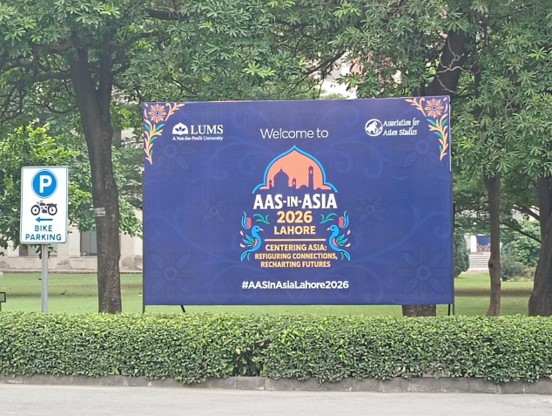
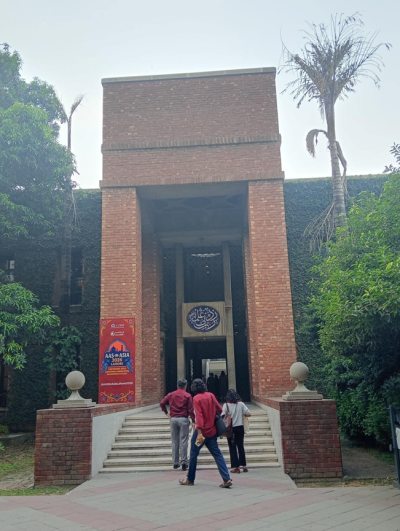
Exploring the campus of Lahore University of Management Sciences. Photo credit: Author.
Exhibitions on migration, inscriptions, rock art, and local history brought material culture and community memory into academic conversations. Music, handicrafts, and Islamic calligraphy further demonstrated that Asia’s intellectual and cultural life extends far beyond conference halls.
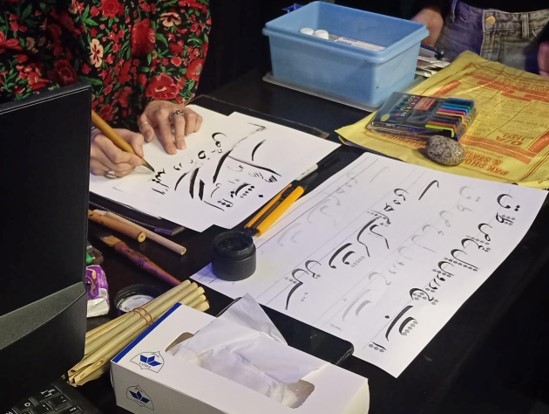
An instructor demonstrates Nastaliq, a traditional style of Islamic calligraphy. Photo credit: Author.
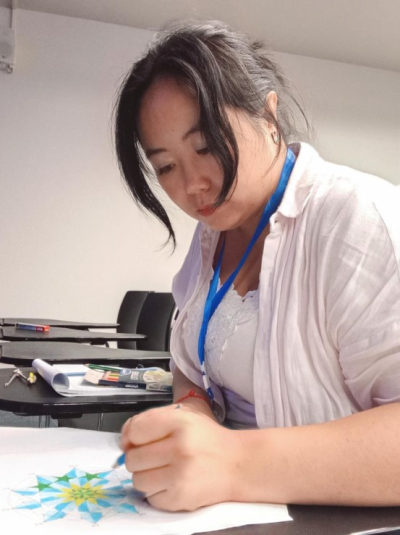
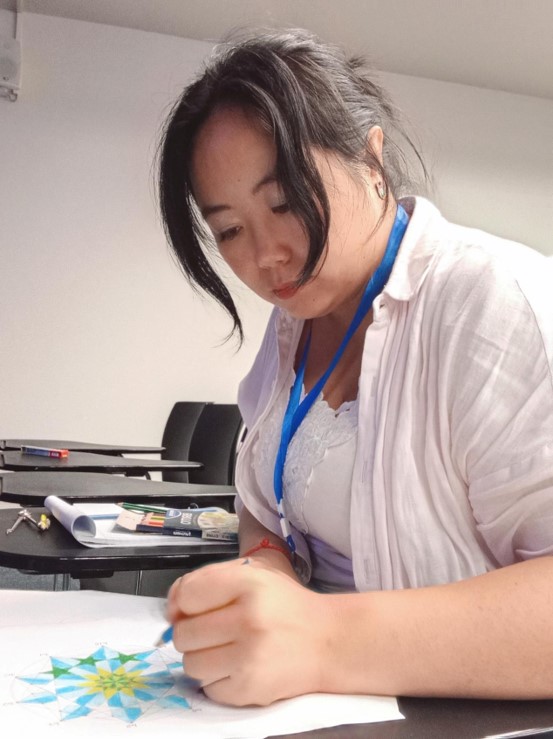
The author participates in an Islamic geometric art workshop. Photo credit: Author.
keynote Address: Climate Change, Power, and Inequality
In his keynote address, Adil Najam connected climate change with water security, urban development, governance, and social justice. Drawing on Pakistan’s experience, he emphasized that climate vulnerability is inseparable from unequal development and access to resources. The question of who can adapt to environmental change is therefore also a question of power and equity.
These contrasts were visible throughout Lahore. Rapid urbanization, air pollution, security checkpoints, and social inequality coexist with modern institutions and comfortable academic spaces.
The contrast between the orderly LUMS campus and the city’s complex realities reinforced a central insight: knowledge, dialogue, and human connections are especially important in a world marked by contradictions.
Beyond Borders: The Future of the Global South
At the conference’s opening ceremony, the powerful rhythms of Punjabi dhol drums and traditional Sufi dhamal dancing transformed the academic setting into a celebration of local culture. Asia was no longer simply a subject of scholarly discussion; it was vividly present through music, movement, and tradition.
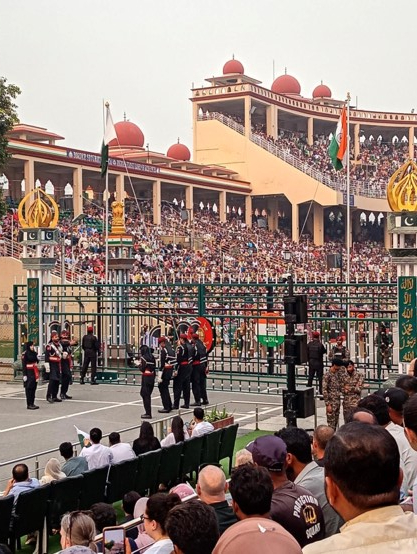
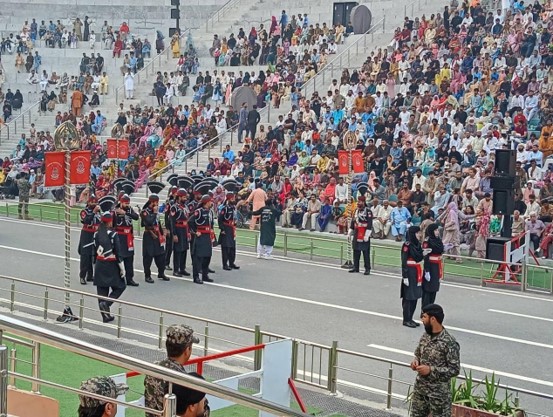
During the conference, the author and several participating scholars visited Wagah to observe the border flag-lowering ceremony. Photo credit: Author.
Another memorable experience was visiting Wagah, approximately 20 kilometers east of Lahore, to witness the ceremonial lowering of flags at the India–Pakistan border. The elaborate ceremony reflected national pride, but also recalled the profound consequences of the 1947 Partition, which reshaped political boundaries, migration, and national identities.
Standing at the border, one is reminded that while political boundaries may be sharply drawn, languages, food, music, religion, and historical memories cannot be so easily divided. These experiences invite us to reconsider who has the authority to interpret history, participate in knowledge production, and imagine the future.
Asia has never been a static map. The Global South is not merely a region defined by hardship and challenges, but also a source of knowledge, cultural creativity, historical agency, and new visions for the future.
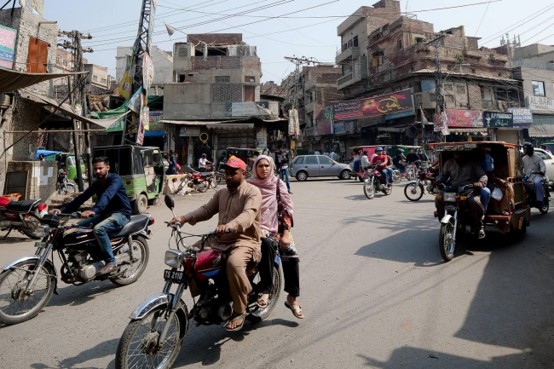
Street scene in Lahore. Photo credit: Migrationology.