“How Did the Cold War Shape Democracy and Media in Asia?”
When we asked Lumen, UDP’s AI-powered discovery platform, the question in Chinese, English, Japanese, and Korean, the most surprising discovery was the distinct research perspectives, scholarly traditions, and historical depth each language revealed.
4 Languages, 4 Historical Frameworks
The conclusions generated by Lumen varied significantly across languages. The Chinese response focused on anti-communist systems, martial law, media control, and the democratization and media liberalization that emerged after the 1980s, presenting the Cold War as a key historical context for democratic development in Taiwan and East Asia. The English response shifted toward a broader Cold War Asia framework, emphasizing U.S. influence, the Cultural Cold War, media ecosystems, public spheres, and identity formation, placing Taiwan within a wider regional Cold War structure. The Japanese response paid greater attention to education systems, cultural policies, and the formation of social thought, tracing the long-term foundations that preceded democratization and media transformation. The Korean response highlighted authoritarianism, anti-communism, democratization, and social movements, revealing the enduring interaction between state power and democratic forces.

Multilingual Search, Complementary Literature
The cited sources revealed equally distinct patterns. In short, Chinese asks how democratization occurred, English explores how the Cold War shaped Asia, Japanese examines how societies were formed, and Korean focuses on how authoritarian systems evolved toward democracy. These differences are not simply products of translation. Rather, each language activates different scholarly traditions and bodies of literature within the same database, allowing researchers to approach a shared historical question from multiple perspectives.

4 Research Traditions, 4 Extended Exploration
Chinese pathways continue into democratization and political transformation. English pathways investigate cultural Cold War mechanisms, institutional structures, and the making of Asian societies. Japanese pathways trace the historical processes of education, ideology, and social formation. Korean pathways delve deeper into authoritarian rule, democratic movements, and social resistance. The same question generates different follow-up inquiries in each language, revealing the distinctive concerns and intellectual traditions behind them.
When Different Scholarly Traditions Begin to Converse
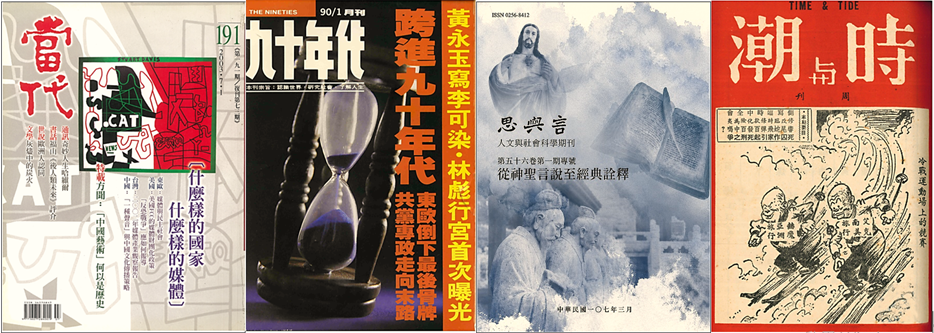
Lumen’s multilingual search brings together both cross-language literature complementarity and historical depth. It allows different scholarly traditions to enter into dialogue while bringing important studies from the 1950s to the 1990s back into contemporary discussion. These older works are not merely historical records. They provide essential clues for understanding how democracy, media ecosystems, and public discourse in Asia were formed. By connecting multilingual scholarship across generations, Lumen helps researchers uncover a richer and more comprehensive picture of Asia’s modern history.
◆For inquiries:
TEL: +886-2-2365-5908
udp.kevin@gmail.com (Kevin Chang, Director)