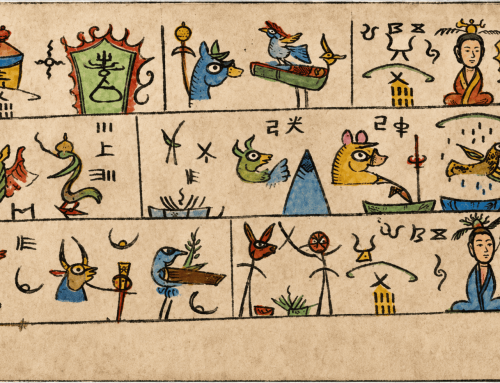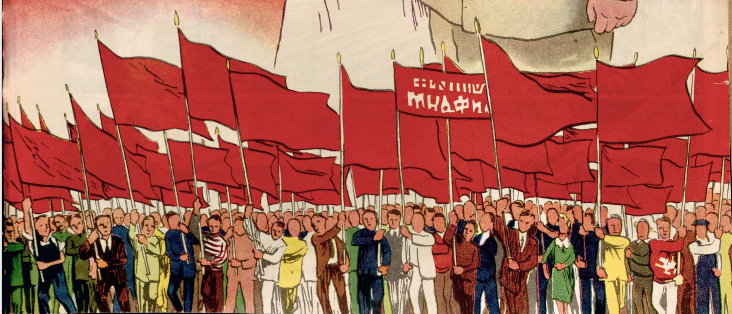
From the state-building experiments in the Chinese Communist revolutionary base areas of the 1930s, to the mass mobilization portrayed in political cartoons of the 1950s, and further to media observations during the integration of East and West Germany—these three rare archives on the Chinese Communist movement and socialism take you back to the critical historical moments of the twentieth century, opening new avenues for research and fresh intellectual inspiration.
Manhua Digital Archive (漫畫) 1950-60
How did 1950s China use comics to shape the public imagination?
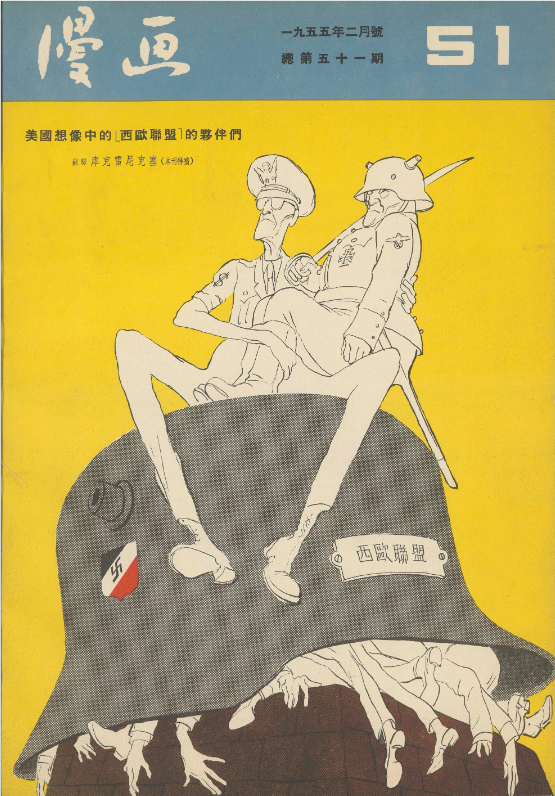
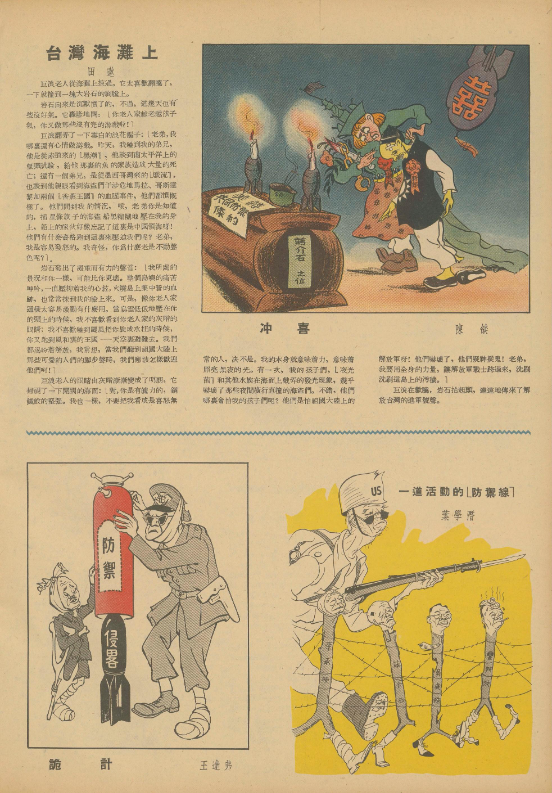
From Korean War mobilization, land reform propaganda to the mass campaigns of the Great Leap Forward, comics were not merely entertainment but a vivid medium linking state policy with everyday life. As “visual culture” and “information warfare” become increasingly central today, this archive presents page-by-page original images alongside full-text search, offering scholars rare primary materials for the study of China between 1950 and 1960.
Manhua Monthly was a state-sponsored illustrated periodical of the People’s Republic of China in the 1950s, founded by Mi Gu米谷 (1918–1986), then head of the art section of the Shanghai edition of Jiefang Daily. It primarily featured visual propaganda aimed at mobilizing public support for the Korean War. From 1953 onward, the magazine expanded in both size and frequency, depicting everyday life in richer and more colorful ways while promoting public policies such as land reform. In the late 1950s, following the “Hundred Flowers” campaign, political cartoons came under an increasingly restrictive creative environment. After 1958, illustrations focused largely on encouraging participation in the Great Leap Forward, gradually departing from earlier humorous and life-oriented styles. Regardless of its domestic themes, the outward message remained consistent: opposition to imperialism and solidarity among socialist movements. This archive contains the complete run from its inaugural issue (1950–1960), totaling 164 issues, and is particularly valuable for research in political communication, visual culture, Cold War studies, and digital humanities.
Chinese Soviet Republic Archive( 1905-1940)
A “state-in-the-making” before 1949
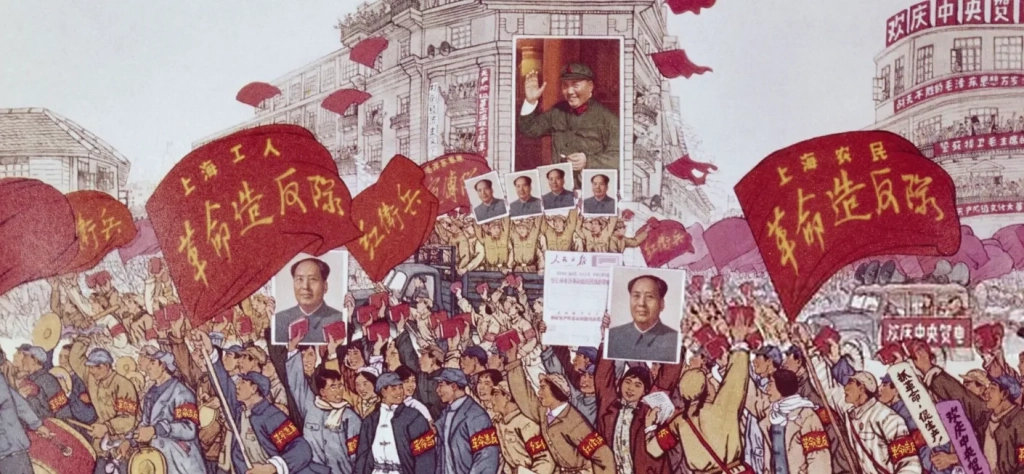
This archive collects proclamations, telegrams, and government documents produced by the Chinese Communist regime in the Jiangxi revolutionary base during the 1930s, presenting a “laboratory of statehood” still at the margins of historical narratives. From monetary systems and military mobilization to local governance, it marks both the beginning of “Two Chinas” and the prototype of the People’s Republic of China. These rare and critical documents fill key gaps in the early history of Communist state-building and enable scholars to reconsider the formation logic of modern China’s political system.
The “Chinese Soviet Republic,” known in China as the “Central Revolutionary Base Area,” was founded by Mao Zedong 毛澤東 and Zhu De 朱德 on November 7, 1931, with support from the Communist International. Initially confined to a small mountainous border region between Jiangxi and Hunan provinces, it rapidly expanded and developed its own state apparatus, including a national bank, currency, and taxation system—thus widely regarded as the prototype of the People’s Republic of China. Between 1931 and 1934, under Mao’s leadership, it evolved into a functioning miniature communist state, with full Party control over government, a Red Army, Party-led judicial and educational systems, and an economy that sustained the regime for several years—until it could no longer withstand the Nationalist forces led by Chiang Kai-shek. Its rapid rise prompted a series of military campaigns by Chiang, ultimately forcing Mao to abandon the regime and begin the Long March in late 1934. When Mao rose to power again in 1949, these experiences proved invaluable. For decades after the founding of the People’s Republic of China, this early history remained largely absent from official narratives. These crucial materials were later collected in Taiwan in the early 1960s through collaboration between the Hoover Institution and Vice President Chen Cheng, filling an essential gap in the study of early Communist state formation.
Neues Deutschland, 1946-2022
From the Berlin Wall to democratization: the transformation of socialism
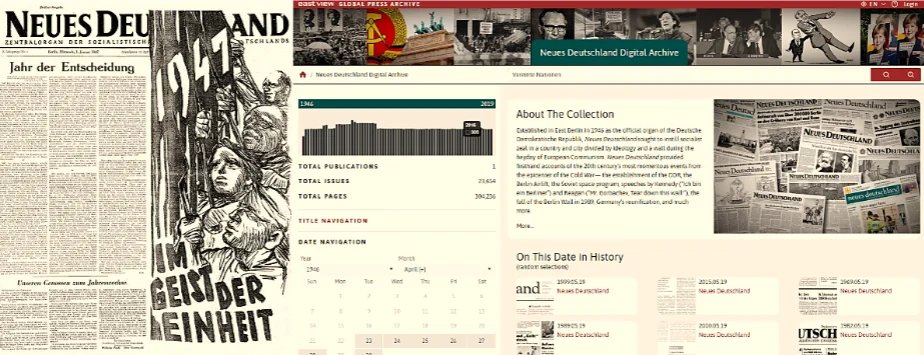
As the official newspaper of East Germany, Neues Deutschland played a central role in shaping public discourse and political language in socialist Germany. This comprehensive digital archive of over 300,000 pages documents not only Cold War-era international politics and social life, but also the transformation of left-wing media after German reunification. At a time when European politics is once again being reshaped and Cold War memory is being revisited, this archive provides exceptionally rich primary sources for media history, German studies, and intellectual history.
Founded in 1946 in the German Democratic Republic and headquartered in Berlin, Neues Deutschland served as the official organ of the Socialist Unity Party of Germany, under the slogan “The Socialist Daily.” It was dedicated to promoting communist ideology within East Germany and reporting on domestic and international affairs during the Cold War, and was once described as “Germany’s Pravda,” reflecting its scale and influence. Following the fall of the Berlin Wall in November 1989 and German reunification, the Socialist Unity Party was transformed into the Party of Democratic Socialism in December of the same year, later becoming The Left Party in 2007, under which Neues Deutschland continues to be published. From an official state newspaper to a representative left-wing daily in a democratic Germany, it not only witnessed the transformation of socialist political culture after the fall of the Berlin Wall but also actively participated in the social integration of East and West Germany. This archive contains over 304,000 pages. In addition to textual research, users can analyze original page layouts, photographs, and visual propaganda materials, and even access a “Today in History” feature—making it an invaluable resource for studying modern German history.