
China Bronze
and Stone Rubbings Collection
(Pre-Qin Period–Early 21st Century)
Introduction
History Carved in Stone, Worlds Revealed in Words
What stories can a stone inscription tell beyond the beauty of its calligraphy? A forgotten famine, the construction of a bridge, the founding of an academy, or the achievements of a local official—stories of everyday life and local communities that may never have entered official histories can remain preserved in stone for centuries. Bronze and stone inscriptions are more than works of writing and art; they are firsthand witnesses to history.

The newly released Phase 9 of the database adds approximately 6,900 rare rubbings, with a particular focus on northern China, especially Shanxi Province and its surrounding regions. The new materials include stone steles, cliff inscriptions, Buddhist and other religious carvings, and tomb epitaphs. Highlights range from a 1570 poetic inscription by Wang Guoguang at Qinglian Temple to a Qing-dynasty stone engraving of Su Shi’s “On Jade” (Yu Lun), alongside inscriptions documenting local governance, natural disasters, education, bridge construction, and religious life.
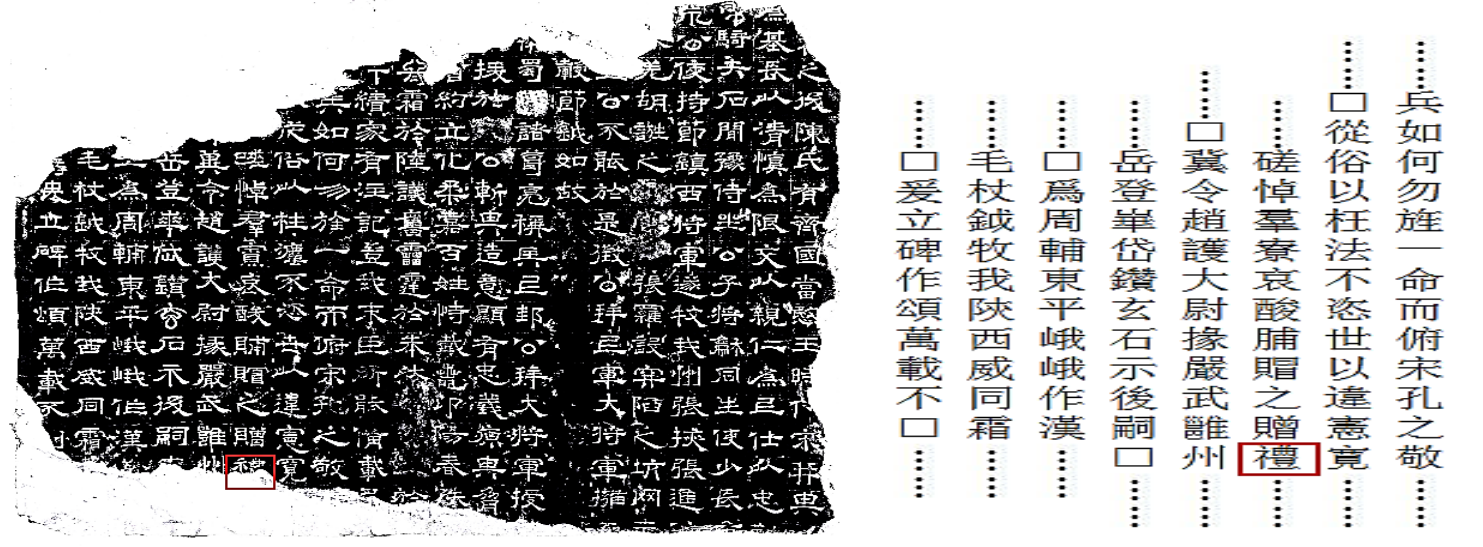
Beyond their artistic and calligraphic significance, these materials provide invaluable primary sources for history, archaeology, paleography, calligraphy, local history, socioeconomic history, religious studies, ethnology, and cultural studies, opening new avenues for interdisciplinary research.
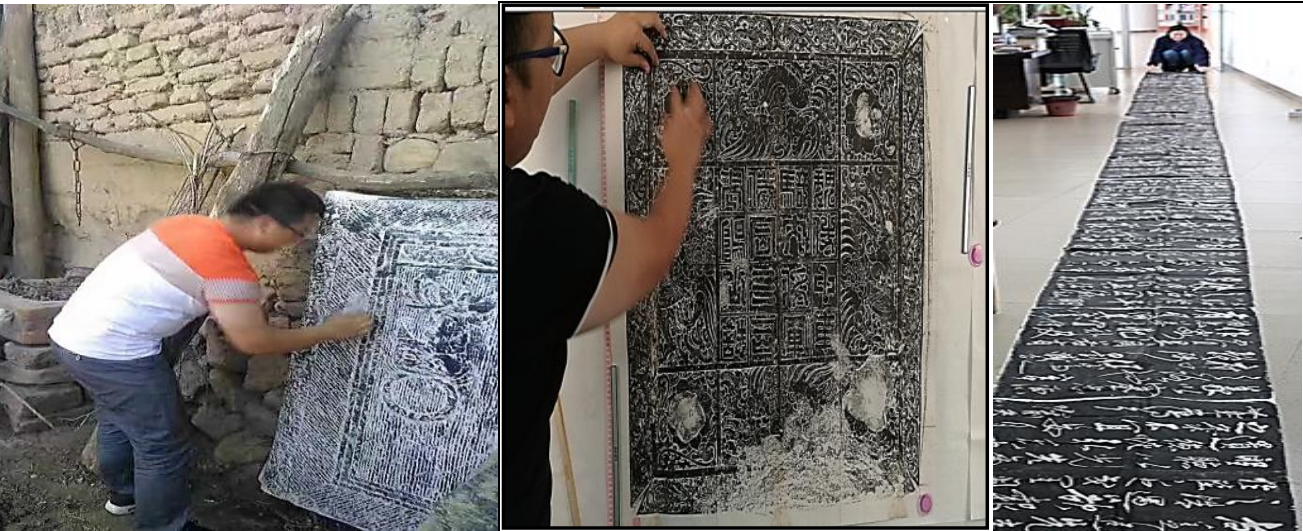


The World’s Only Full-Text Digital Collection of Original Rubbings
The Chinese term “jinshi” (金石, literally “metal and stone”) refers to inscriptions engraved or cast on bronze vessels and other metal objects, as well as those carved into stone. Unlike historical texts that have been repeatedly copied, transcribed, or reprinted, original rubbings preserve a more direct record of the inscriptions themselves. They offer indispensable evidence for reconstructing historical events, correcting textual errors, and supplementing received historical sources.
Developed by the Gansu Provincial Center for the Compilation and Translation of Ancient Documents, the collection brings together the expertise of scholars and specialists in China and abroad. Through years of systematic research and digitization, the project has assembled bronze and stone inscriptions from archaeological discoveries, surviving monuments, and collections held by institutions around the world. Each item integrates an image of the original rubbing, a complete transcription, and detailed descriptive information.
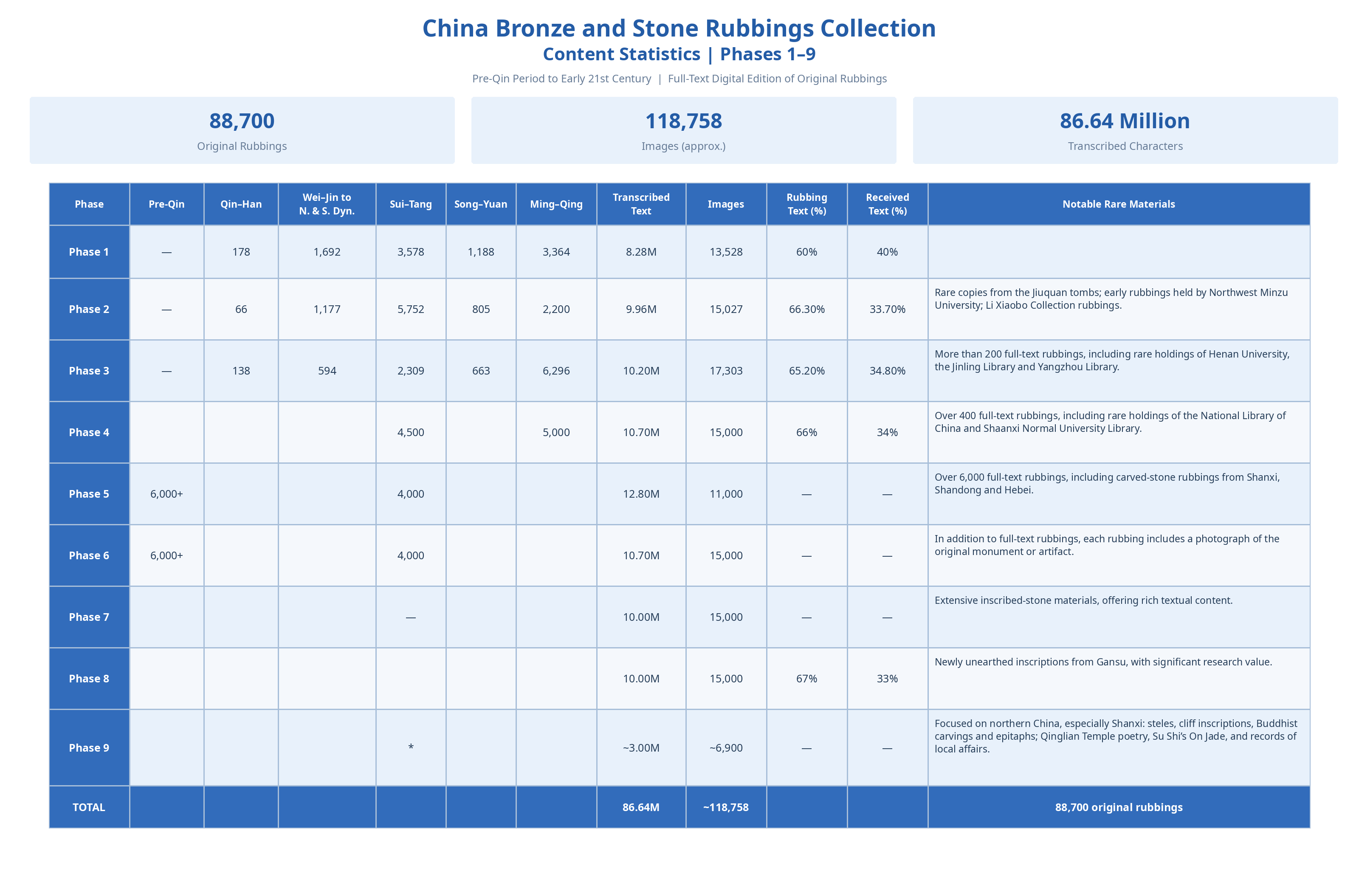
Across its nine phases, the database now contains approximately 88,700 original rubbings, more than 118,700 images, and 86.64 million Chinese characters of transcribed inscriptions, spanning the pre-Qin period through the early 21st century. It offers researchers worldwide an extensive digital resource of primary-source epigraphic materials.
Filling a Major Gap in Epigraphic Sources from the Ming and Qing Dynasties to the 21st Century
The Chinese term “jinshi” (金石, literally “metal and stone”)
Traditional collections of Chinese epigraphy have generally emphasized celebrated inscriptions from periods before the Yuan dynasty. This collection extends its coverage into the early 21st century, with particular strength in materials from the Yuan, Ming, and Qing dynasties, the Republican period, and modern times.
According to statistics for the first eight phases, approximately 80% of the collection consists of materials dating from the Yuan dynasty onward. Many of these inscriptions and rubbings have been systematically documented and made available for the first time, offering exceptional historical value.
Beyond their importance for calligraphy, paleography, and epigraphic studies, these materials preserve evidence of local administration, economic activity, religious beliefs, folk traditions, and everyday life. They provide valuable perspectives that complement official dynastic histories and other transmitted texts.
Rare Rubbings from Mainland China, Hong Kong, Macao, Taiwan, Asia and Europe
Through collaboration with collecting institutions in China and overseas, the project brings together rare bronze and stone rubbings dispersed across mainland China, Hong Kong, Macao, Taiwan, Japan, Korea, the United States, France, Sweden, South Asia, and Southeast Asia.
By integrating materials that were previously scattered across different regions and difficult to consult collectively, the database creates a comprehensive research resource spanning geographical boundaries and historical periods.
An Innovative Four-Level Classification System for Efficient Research
Traditional epigraphic collections are often arranged primarily by material and chronological period, making detailed classification and comparative research difficult.
The database introduces an innovative four-level classification system organized by Division, Section, Volume, and Category (部、編、卷、類). Materials are first grouped into three major divisions—Bronze, Stone, and Others—and then subdivided according to historical period and document type.
The Bronze Division includes materials from the earliest periods, the Shang and Zhou dynasties, and the Qin and Han dynasties. The Stone Division encompasses inscriptions associated with Han Chinese and ethnic minority communities, religious monuments, cliff inscriptions, and other categories, with further distinctions among steles, tomb epitaphs, and commemorative inscriptions.
This structured classification allows researchers to browse systematically, compare related materials, and conduct more precise searches across the collection.
Three Principles of Scholarly Excellence
Grounded in original rubbings rather than secondary reproductions, the collection follows three rigorous principles of scholarly documentation and digitization.
Superior Rubbings: When multiple rubbings of the same inscription are available, the best-preserved and most legible version is selected to provide the clearest possible image of the original source.
Accurate Transcriptions: Every transcription is carefully checked against the original rubbing. Difficult or ambiguous characters undergo three rounds of scholarly review and proofreading to minimize errors introduced through copying or transcription.
Accurate Transcriptions: Every transcription is carefully checked against the original rubbing. Difficult or ambiguous characters undergo three rounds of scholarly review and proofreading to minimize errors introduced through copying or transcription.
Concise Descriptions: Each item includes standardized bibliographic and descriptive information, such as its title, date, material, physical form, textual layout, and place of discovery or preservation, supporting reliable scholarly identification, analysis, and citation.
Every entry provides a complete image of the original rubbing, a full-text transcription, and detailed descriptive metadata, with character-level full-text search capabilities.
This direct connection between original artifacts and carefully verified transcriptions is what distinguishes the database from conventional epigraphic resources based primarily on secondary textual records.
Information

Database Features
● Nearly 90,000 rare original rubbings across nine phases: Approximately 88,700 rubbings, more than 118,700 images, and 86.64 million Chinese characters of transcribed inscriptions.
● Phase 9 now available: Approximately 6,900 newly added rubbings, with a focus on rare epigraphic materials from northern China, particularly Shanxi and surrounding regions.
● More than 3,000 years of historical coverage: From the pre-Qin period through the early 21st century, with materials collected from mainland China, Hong Kong, Macao, Taiwan, and overseas institutions.
● Filling gaps in later-period epigraphic sources: Extensive holdings from the Yuan, Ming, and Qing dynasties, the Republican period, and modern times.
● Original rubbings with full-text search: Every entry includes a complete rubbing image, full transcription, and descriptive metadata, supporting searches at the individual-character level.
● Rigorous scholarly standards: Carefully selected rubbings, verified transcriptions, and standardized descriptions reviewed by specialists.
● Innovative four-level classification: Systematic organization by document type, historical period, and research category for efficient discovery and comparison.
● Broad interdisciplinary value: Supporting research in history, archaeology, paleography, calligraphy, art history, religious studies, ethnology, local history, socioeconomic history, and cultural studies.
● Flexible acquisition and perpetual access: All nine phases are available for individual purchase with perpetual access rights. Annual subscription options are also offered, allowing libraries to build their collections according to institutional research priorities and budgets.
General Agency in Taiwan: United Digital Publications Co., Ltd. (UDP)